






The real problem with Safety Data Sheets isn't creating them. It's proving they've been delivered.
Let's be clear: in the chemical sector, managing REACH Safety Data Sheets (SDS) has become a minefield. For years, Italian and European companies have invested in increasingly sophisticated software to produce impeccable SDSs—correct CLP pictograms, translations into twenty languages, exposure scenarios, structured versioning. All perfect, on paper.
But then comes the moment to deliver them to customers. And that's where something curious happens: companies with cutting-edge regulatory platforms entrust the distribution of Safety Data Sheets to Outlook, a hastily attached PDF, or a customer service employee who sends them "when they remember." The paradox is evident.
What the REACH Regulation truly says (and why almost no one fully complies)
The REACH Regulation (EC No 1907/2006) is crystal clear. The Safety Data Sheet must be provided to the recipient of the substance or mixture before or at the time of the first delivery. And when the SDS is updated with new relevant information, the supplier is obligated to transmit the new version to all customers who received that product in the preceding 12 months.
It sounds simple. In the reality of a chemical company that handles hundreds of product references and thousands of customers, it's an enormous complexity. Because it means being able to answer—at any time, even during an ASL inspection—precise questions:
To whom was that product sold, and when?
Which version of the SDS was in effect on that date?
Was the Safety Data Sheet actually sent?
Did the customer receive it?
When the update was released, was it notified to all customers from the last 12 months?
Can we prove this with verifiable documentation?
Most European organizations today answer these questions with manual emails, PDF attachments, Excel sheets, and internal processes that no inspector would consider verifiable.
Email delivery and the SDS register
And this is where the problem lies. Sending the SDS as an email attachment is accepted. REACH does not prescribe a form of proof: keep a register with the date, recipient and version sent. In the event of an incident, dispute, or inspection, this “leniency” turns into a much more serious exposure than it seems.
In Italy, REACH penalties can exceed €10,000–€60,000 for an SDS not supplied or updated under Italian Legislative Decree 133/2009, Art. 10. The delivery register helps reconstruct which updates were sent to recipients.
The hidden cost the CFO never sees on the balance sheet
Chemical companies send hundreds, thousands, sometimes tens of thousands of SDSs every year. Who does this work? Regulatory office staff, customer service, commercial back office. Qualified chemical regulatory personnel who spend their days attaching PDFs, verifying active customers, searching for the correct version, resending updates, and responding to manual requests.
It's an invisible operating cost. You won't find it in any balance sheet item, but it's there—and it's significant. Because you're paying high-level regulatory expertise to do data entry.
Resending SDS to customers supplied in the previous 12 months
This is the aspect that most frightens those who work in the chemical sector and truly understand the subject. When a Safety Data Sheet is updated—for new hazard information, REACH modifications, ECHA restrictions, new risk management measures—the supplier must resend the new version to all customers who purchased that product within the last 12 months.
Doing this manually, filtering by product, by purchase date, by destination language, across a portfolio of hundreds or thousands of customers, is simply unmanageable. The risk of omission is not high: it is practically certain. And omission, in the event of an inspection or incident, becomes the direct responsibility of the supplier.
What an advanced SDS management system should do today
The right question to ask is no longer “do we have updated SDSs?” It's another:
“Can we demonstrate that every customer automatically received the correct version of the Safety Data Sheet at the correct time?”
A modern SDS management and distribution system should be able to:
integrate with the company's ERP to automatically recognize orders
identify active customers by product and purchase date
automatically send the correct SDS in the recipient's language
record a verifiable delivery log with send date and time
manage regulatory revisions and send each revision under Article 31(9) without delay to customers supplied in the previous 12 months
exclude inactive customers, avoiding unnecessary mailings
maintain a consultable audit trail history at any time
In practice: transform SDS distribution from an administrative activity into a certifiable process, exactly what an inspector expects to find.
The European future: digital, traceable, integrated
Europe is moving in a clear direction: more digitalization of chemical safety documents, more interoperability along the supply chain, more distributed and verifiable responsibility.
Safety Data Sheets are one of the most underestimated aspects of this transformation. Not because they are missing—but because the vast majority of companies cannot definitively prove who received them, when, in what version, and with what updates.
The competitive difference in the coming years
It won't come from the quality of the SDS. That, by now, is a standard. It will come from the ability to distribute it intelligently, automatically, and verifiably. From the ability to respond to an inspector with a click, instead of three days of searching through email archives.
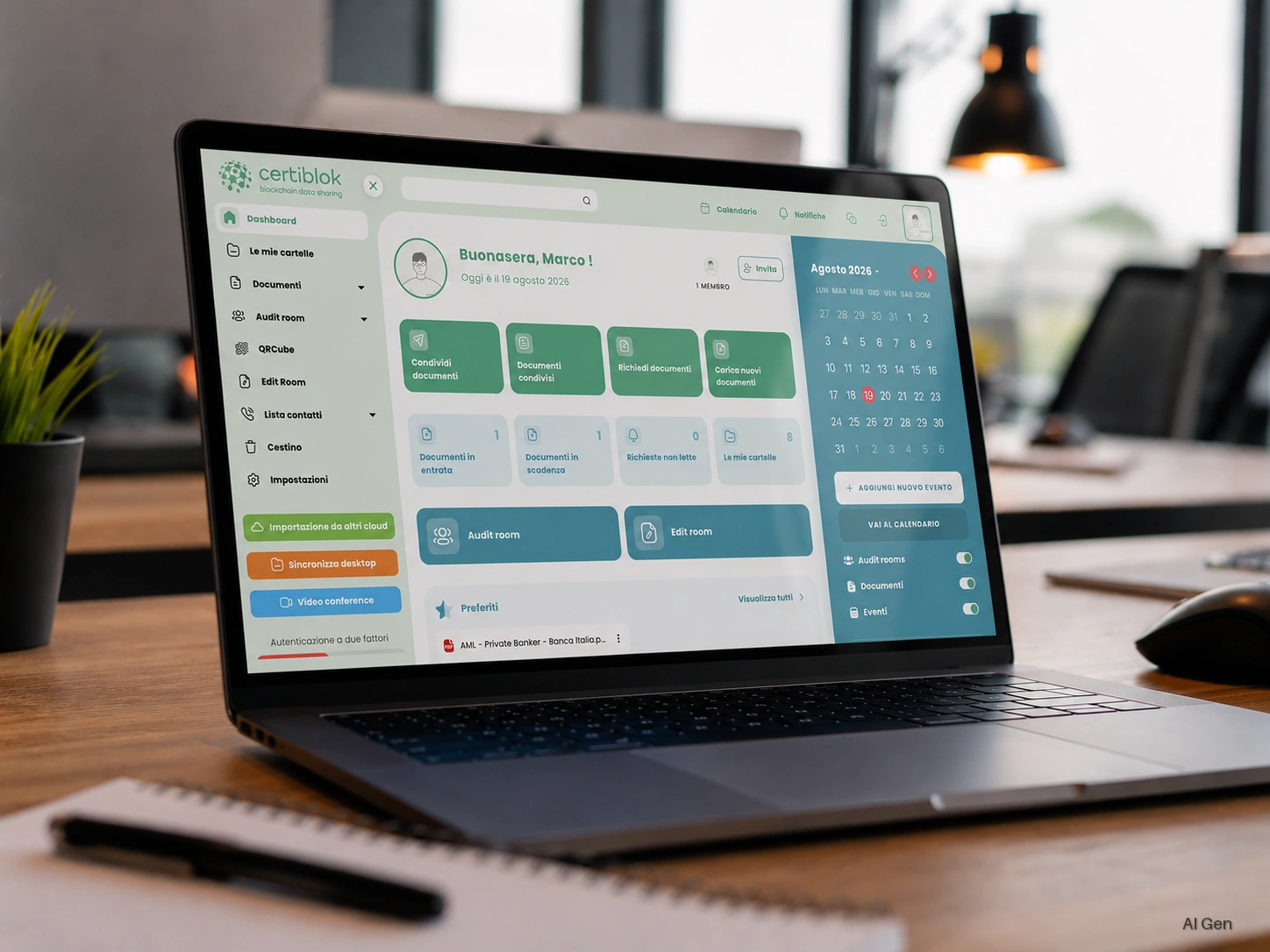
Want to know how Certiblok® SDS Manager automates Safety Data Sheet distribution with delivery register and ERP integration? Book a free 20-minute demo with our team.
Further reading: the complete guide to the safety data sheet (SDS) and REACH.


