




If you build industrial machinery, the QR code for your machine manual is about to become much more than a label: with Regulation 2023/1230 in force from January 20, 2027, it's proof that technical documentation is always accessible, updated, and traceable throughout the machine's lifecycle. In other words: either you comply, or you stop selling in Europe. And no, that's not an exaggeration — it's precisely what the Regulation says.
The scenario you already know (and that will cost you the market from 2027)
Imagine the scene. Your client — a production manager who bought one of your lines eighteen months ago — calls you. Not to thank you. During an inspection, the inspector asked for the updated declaration of conformity. The client checked the drawer, the server, their email. They found the delivery PDF, but in the meantime, you had released a new version of the manual.
Result: documented non-compliance, machine downtime, negative report. And you — who built the machine perfectly — find yourself defending yourself because of a PDF in a drawer that isn't even yours.
The problem isn't the machine. It's the document that nobody ever finds. The manual is delivered once, then disappears into the client's corporate depths. When you release an update, you send an email that might be read, or might not. When an inspection comes, everyone fends for themselves.
This system worked as long as regulations tolerated it. From January 20, 2027, tolerance ends.
What truly changes with Regulation 2023/1230
There's a detail that almost no one sheds light on properly, and it's what revolutionizes the relationship between the QR code, manual, and machines in light of Regulation 2023/1230: the manufacturer is no longer only responsible for producing correct documentation. They must ensure that the client can always have it, in the updated version, for the entire lifecycle of the machine.
It's not enough to deliver. You must prove it was available. At all times. In every language of the markets where you sell.
Those who cannot guarantee this will no longer sell in Europe. Period.
Right QR code vs. trap QR code: the difference that matters
Many manufacturers have already realized this: a QR code on the machine manual is needed to comply with Regulation 2023/1230. Good direction, but be careful not to fall into the most common trap.
A QR code that links to Dropbox, Google Drive, or a page on your website doesn't solve the problem: it just moves it. That link can become unreachable, it can change every time you update the document, it can point to a folder that won't exist five years from now. In other words: the code engraved on the machine stops working precisely when you need it most — during an inspection, ten years after delivery.
The Regulation doesn't ask for a generic QR code. If you choose the digital route, it asks for a document access system that is tracked, updatable, and provable for decades. That's a different matter entirely.
Certiblok®'s QRCube: the QR code that never expires
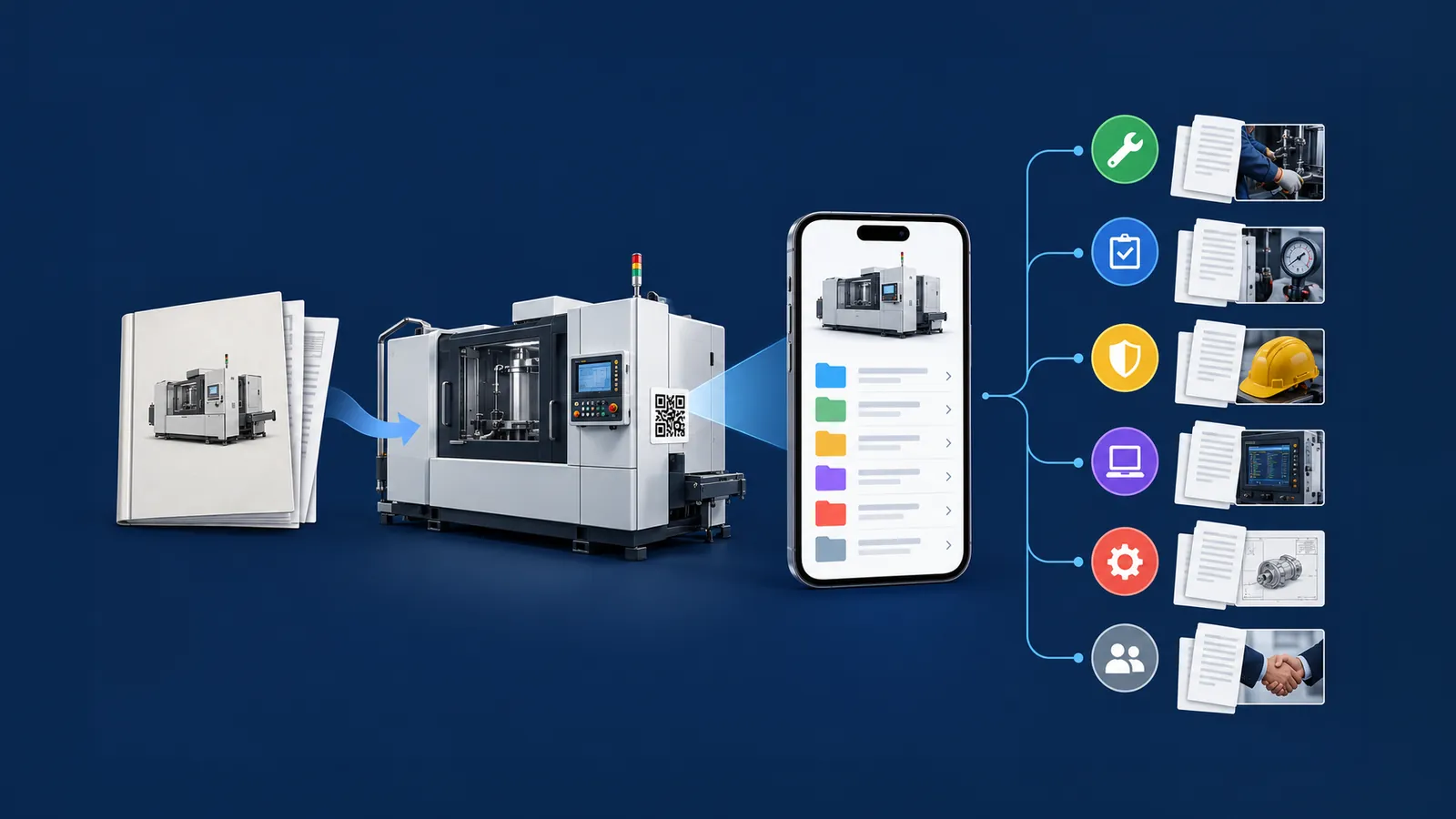
QRCube was developed by Certiblok® precisely to bridge this gap: a unique physical identifier, permanently applied to the machine, linked to all technical documentation on the blockchain.
Let's see it in practice:
Update the manual? The QRCube already points to the new version. No emails, no phone calls, no action required from the client.
An inspection arrives? The documentation is always accessible, and access is immutably recorded. It's not a promise: it's a log that serves as proof.
Selling in Germany or France? The document is automatically distributed in the correct language for the target market.
Your client changes contact person after three years? Irrelevant. The QRCube is physically on the machine. Scan it and you have everything.
The detail sales teams discover last
There's an aspect that sales managers always note with some surprise: QRCube isn't just a compliance tool. It's a selling point.
When you demonstrate how it works during a negotiation — "scan this code and you'll always have everything, in any language, for the entire life of the machine" — you're saying something almost none of your competitors can say yet. You're essentially saying: I'll take care of you even after the contract is signed. And I can prove it.
For a purchasing manager who has already been frustrated chasing a manufacturer for months for an updated manual, that phrase is worth more than a percentage point discount.
Why waiting until January 2027 is already too late
Regulation 2023/1230 comes into effect on January 20, 2027, and imposes a new standard for QR codes, manuals, and machine document traceability. Those who start today will be ready, comfortable, with well-honed processes. Those who wait until autumn 2026 will be up against it, with production lines halted to sort out documentation.
And then there's the export issue, which too many underestimate: Northern European markets — Germany and the Netherlands leading the way — are already including compliance with Regulation 2023/1230 in their supply specifications, a year ahead of the deadline. Those who aren't ready will lose orders in 2026, not 2027.
The QR code on the machine is not a decorative sticker. From 2027, it is your digital signature, your traceability, your license to continue selling in Europe. And in the meantime, it's already a commercial argument today that sets you apart.
Want to see QRCube applied to your production process? A 20-minute demo, no obligation.