




Safety Data Sheets (SDS) are mandatory documents for all companies that produce, distribute, or use chemical substances. Their function is to provide essential information on the risks, use, transport, and disposal of products. Today, however, the challenge is no longer about creating the document, but rather how to correctly share SDS with customers, ensuring security, traceability, and compliance.
More and more companies are looking for solutions to share online safety data sheets, manage cloud SDS, ensure REACH and CLP compliance, and track the sending and reading of documents. This is a need that traditional tools can no longer meet.
Why traditional methods are no longer adequate
Many companies continue to use inadequate tools for document management: emails with PDF attachments, generic shared folders, portals without access control. These methods do not guarantee document security, do not offer traceability, do not manage versioning, and above all, do not provide a tracked record of delivery and receipt.
The result is a concrete risk: customers using outdated datasheets, non-compliance with regulations, and the inability to demonstrate the distribution of SDS in case of an inspection.
What REACH and CLP require for safety data sheets
The European regulations REACH and CLP require that safety data sheets are always up-to-date, easily accessible, provided to customers, and consistent with the latest available information. However, the regulation also implies the need to demonstrate the correct distribution of the document. And it is precisely on this point that many companies are exposed: they have an updated SDS, but they have no way of proving that the customer actually received and viewed it.
The limitations of traditional SDS software
Software dedicated to managing safety data sheets is useful for creating SDS, archiving documents, and managing chemical databases. However, it often does not cover critical aspects such as advanced IT security, document auditing, access traceability, and protection against ransomware attacks. In short: they manage SDS, but not their secure sharing.
How to share SDS securely and tracably
Modern management of datasheets must include four fundamental elements.
Controlled access, where only authorized users can view the documents.
Complete traceability, which monitors who accesses, when they do, and what they download.
Automatic versioning, which always makes the latest updated version available, eliminating the risk of obsolete documents.
File protection, which makes them unmodifiable and protects them from cyberattacks.
The Certiblok® solution for sharing safety data sheets
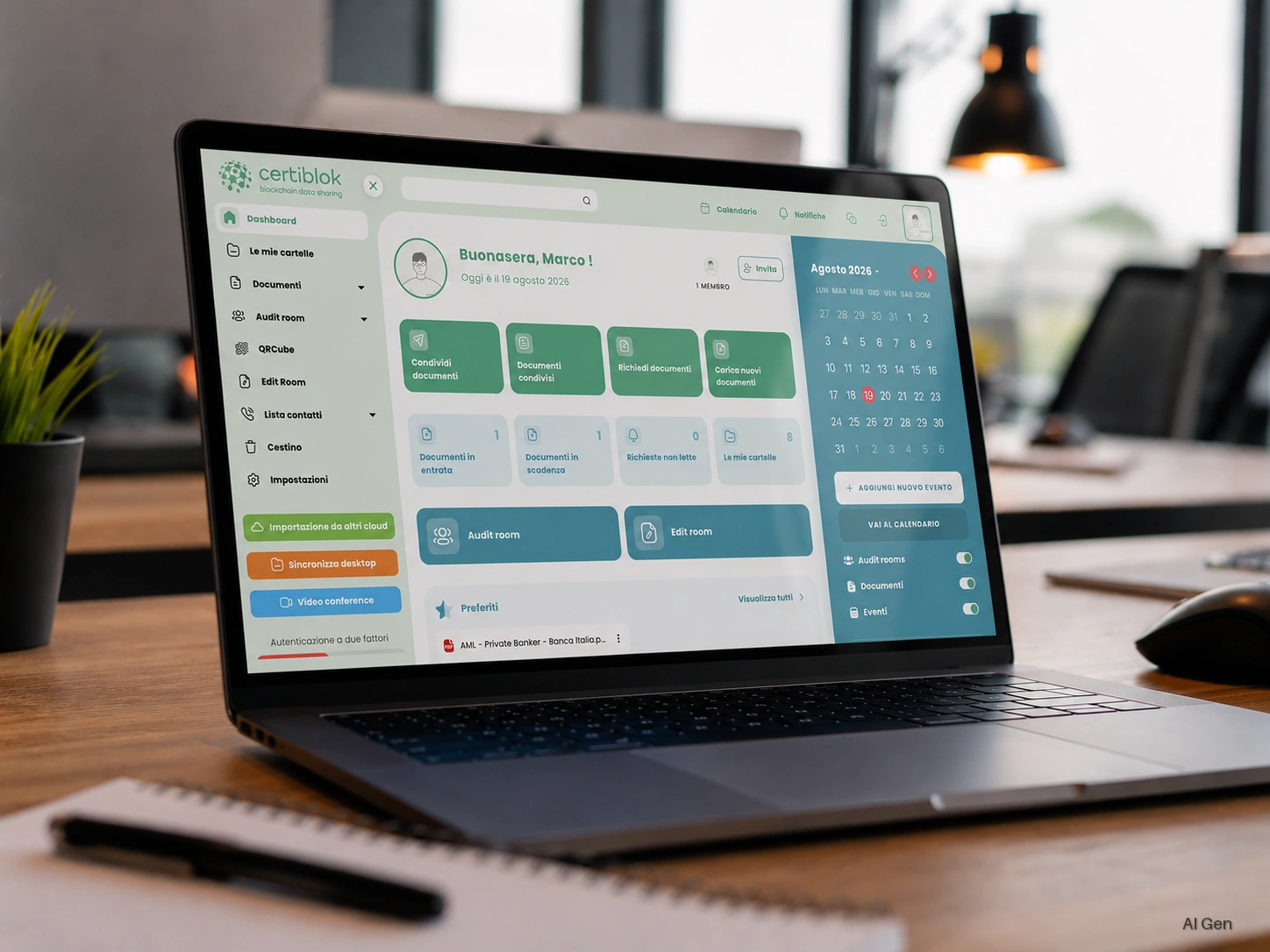
To meet these needs, some companies are adopting secure document sharing platforms like Certiblok®, based on decentralized cloud, blockchain technology, and advanced document auditing.
The concrete advantages relate to several areas. In terms of secure sharing, Certiblok® allows sending via direct links to the sheet, always active and without login, and automatic delivery of every revision under Article 31(9) to customers supplied in the previous 12 months. In terms of document auditing, it allows verifying sending and obtaining proof of delivery, a fundamental element in case of inspections or disputes. In terms of version management, it always ensures the availability of the updated version and maintains a complete history of changes. In terms of IT security, it protects against ransomware thanks to distributed data without a single point of failure and unalterable documents.
A competitive advantage, not just an obligation
Implementing a secure solution for sharing safety data sheets helps reduce legal risk, improve regulatory compliance, increase customer trust, and differentiate from competitors. SDS management is evolving from a mere regulatory obligation to a strategic process for safety and control: platforms like Certiblok® represent this evolution.
Further reading: the complete guide to the safety data sheet (SDS) and REACH.


