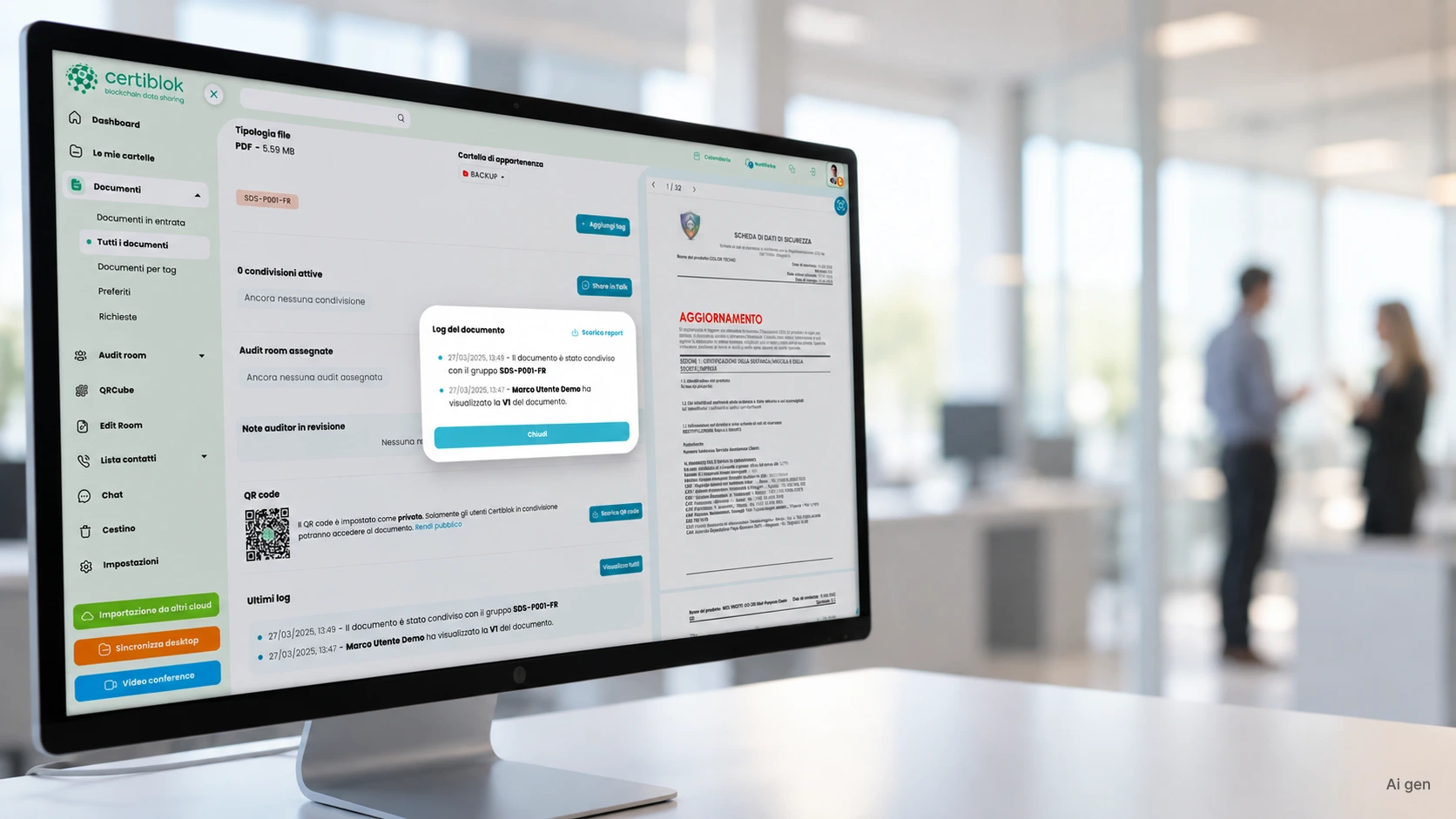
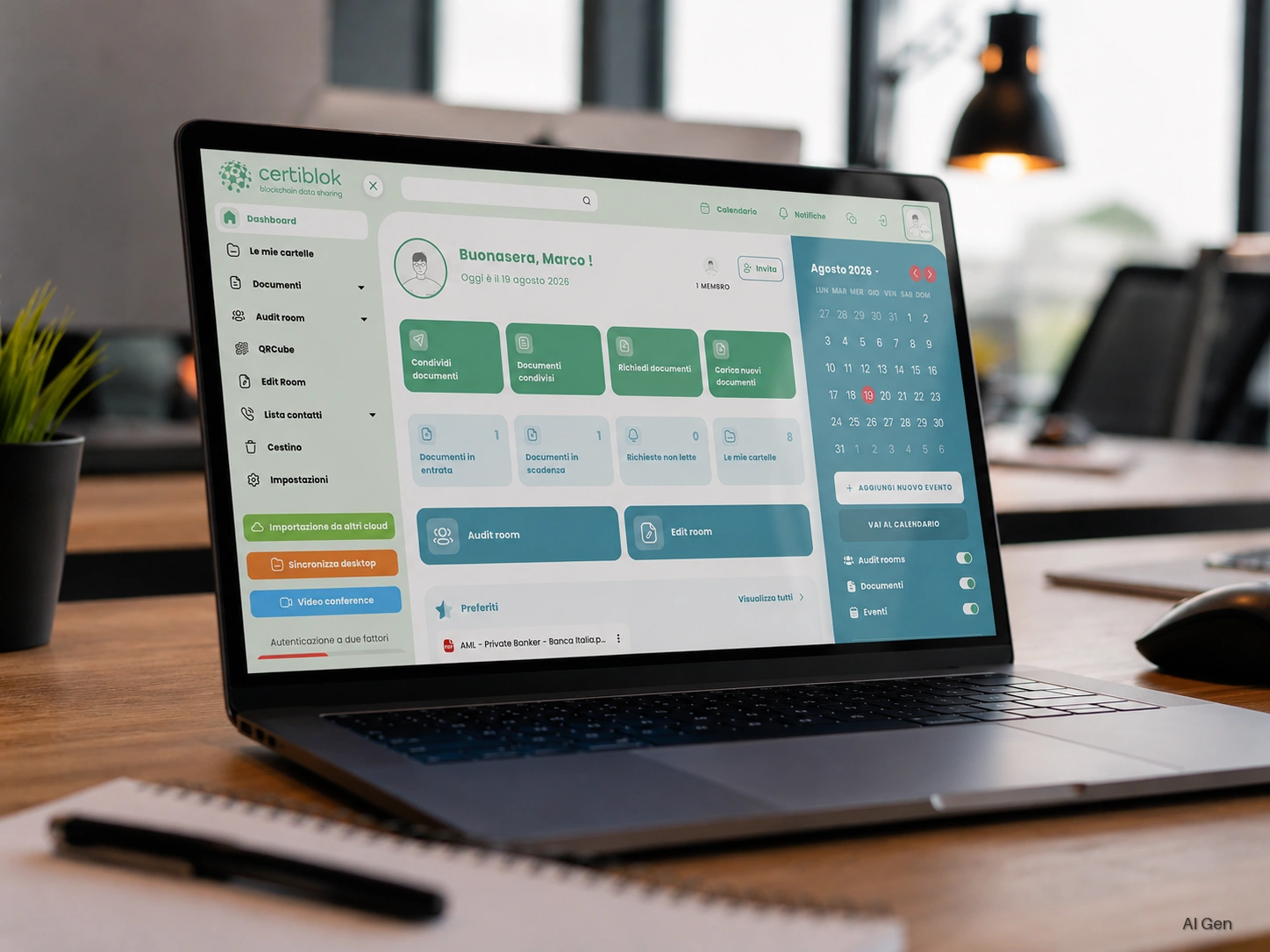






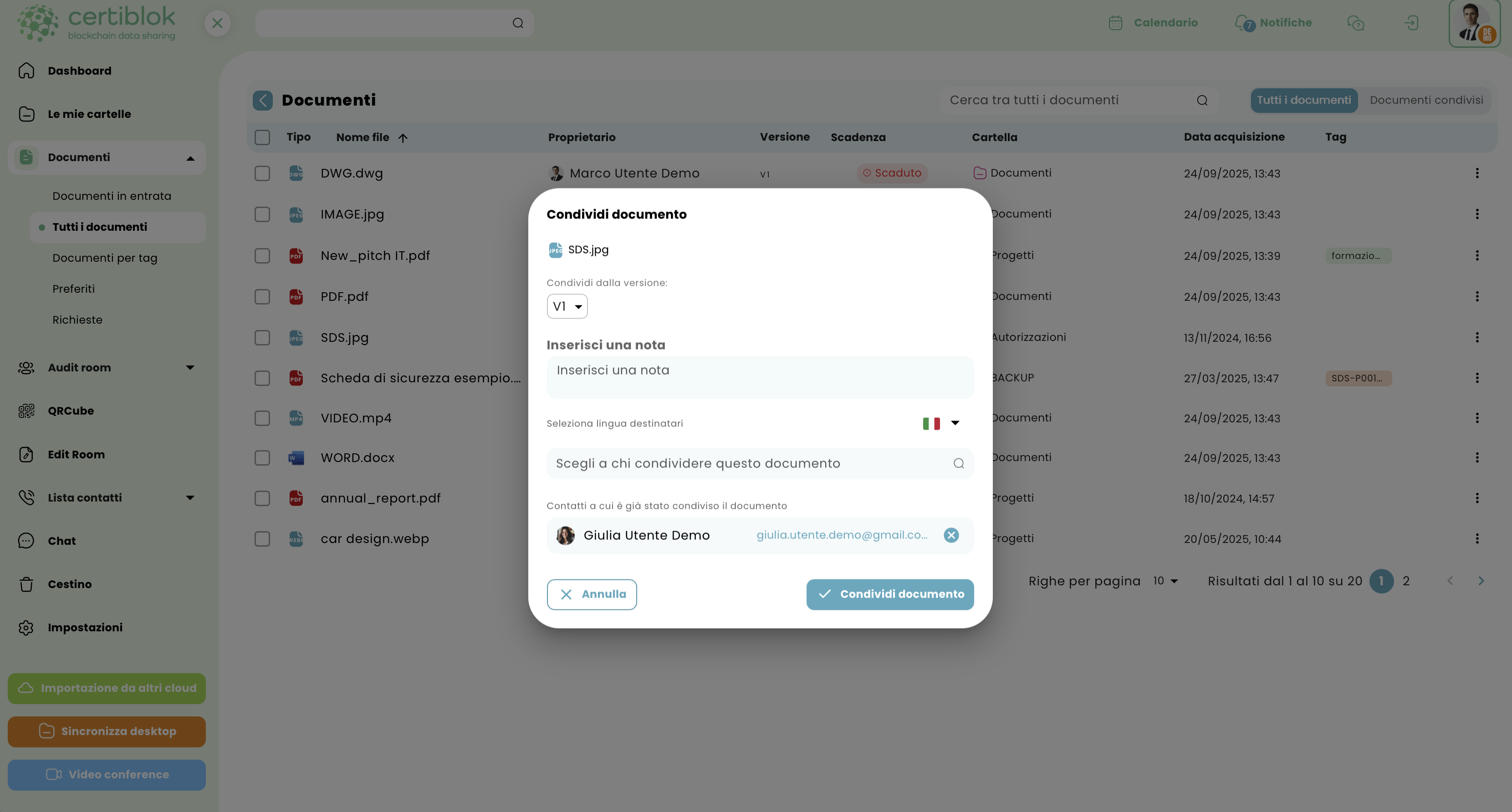
Active sharing distributes information externally by notifying recipients with each revision, while passive sharing collects files and certificates from third parties without granting direct archive access. Choosing between these two models determines the level of control over enterprise data.
In summary:
Active sharing distributes files externally while maintaining a dynamic link to new revisions
Passive sharing enables the secure receipt of large attachments from suppliers or clients without requiring an account
Both models eliminate the fragmentation typical of email attachments
Detailed audit logging provides documentary evidence valuable for regulatory inspections
Terminating an active share stops notifications for future updates without altering the audit history
What is the fundamental distinction between the two exchange models?
In daily business workflows, the exchange of technical information, contracts, and certifications often suffers from chaotic handling. Mass email delivery creates misaligned copies, attachments rejected by mail servers due to file size limits, and temporary links that expire after a few days. To establish sound document governance compliant with the General Data Protection Regulation (EU Regulation 2016/679, accessible on EUR Lex), companies must determine whether they need to transmit a controlled document or acquire material from third parties.
To explore the capabilities of our document file sharing platform, it helps to examine the underlying mechanics. In active sharing, the company holds the original file in the DRM & Archive module and distributes access outward. Its distinctive feature lies in the document lifecycle: with every version update, the system automatically notifies recipients registered on that workflow. There is no need to resend emails or check who holds an outdated version. A distribution group like Ferritalia manages 28,000 customers and 11 companies served via API, eliminating the circulation of unverified local copies.
In passive sharing, the workflow reverses. The organization establishes a secure entry point through a document request. External suppliers, consultants, or worksites can upload files without size limits and without registering for an account on the platform. The document enters directly into the secured perimeter of the corporate archive, encrypted with AES 256 and fragmented across a distributed network of 26,000 nodes, where just 29 out of 80 fragments are required to reconstruct the original data.
When is active sharing necessary?
Active sharing addresses the operational need to distribute data subject to continuous technical or regulatory updates, where using an outdated copy creates legal or operational risks. It typically applies to:
Operating manuals and equipment datasheets for installers or maintenance technicians
Technical drawings in DWG or DXF format sent to manufacturing subcontractors
Commercial price lists and catalogues distributed to agency networks
Quality management system procedures compliant with UNI EN ISO 9001
In the standard active workflow managed via Certiblok®, recipients view files through a web preview without mandatory local download. Through the Share'n Talk feature, sender and receiver can converse directly alongside the document, keeping communication contextualized. If the supplier relationship ends, the owner can terminate the active share. From that moment, the recipient will no longer receive alerts regarding subsequent versions.
When is passive sharing more efficient?
Passive sharing resolves the bottleneck of inbound document collection. When procurement, health and safety officers, or quality managers need to collect certificates, pro forma invoices, appraisal reports, or insurance policies, email requests lead to endless manual reminders and full mailboxes.
With passive reception, the company sends a unique delivery link. The external vendor drags and drops files, including multi-gigabyte uploads, into a guided space. The system instantly links the material to the correct vendor, logs the upload timestamp, and alerts the internal manager. In regulated sectors like chemicals, where organizations such as Uniflex coordinate hundreds of safety data sheets, automating collection and monitoring drastically reduces handling times and protects against regulatory penalties.
What are the operational differences compared?
The following table summarizes the technical and operational characteristics of both document management models.
Management parameterActive sharingPassive sharingData flow directionFrom company to outsideFrom outside to company archiveRecipient registrationNot requiredNot requiredVersion updateAutomatic notification of new revisionsUpload of new revisions by third partyFile size limitsNo size limitNo size limitContextual collaborationAvailable via Share'n Talk chatReception tracking in log registryChannel interruptionPossible interruption to stop future notificationsClosure of document request
How does workflow management support audits?
Every share, whether active or passive, generates a verifiable digital audit trail. Article 5 of the General Data Protection Regulation mandates that data must be processed with appropriate security and integrity. Adopting an activity log for views and receipts proves who sent or received a given file and which revision was valid at any historical point.
During an inspection, presenting a structured repository reduces audit time by approximately 40 percent compared to paper files or unprotected shared folders. Field industrial cases, such as SOMIN Srl in manufacturing, recorded a 65 percent reduction in audit preparation time, passing inspections on the first review cycle using Audit Rooms. Room creators grant external inspectors selective access strictly to relevant files without exposing company credentials, generating a detailed closing summary report at the end of the session.
Choosing between active and passive sharing is not merely a technical detail; it defines how an organization safeguards its informational assets and streamlines day-to-day operations.
Want to explore how to implement active and passive document workflows in your company? Contact our consultants for a tailored operational demo by visiting the contact page on our website.