



Digital archiving becomes cost-effective when the hourly cost spent searching for and managing physical binders exceeds the investment in the platform, and when legal obligations require version traceability for ten years. The transition eliminates physical space costs and reduces the time required to retrieve files during inspections by up to 40%.
In summary
- Storing paper documents incurs costs related to physical space, the risk of loss, and time wasted on manual searches.
- The Civil Code and technical standards require immediate retrieval of company records for periods of up to ten years.
- A structured digital archive reduces the time spent managing compliance checks and audits by 40%.
- Digitization is not merely scanning to PDF, but rather the controlled management of versions, permissions, and secure access.
- The transition becomes worthwhile as soon as document volume involves multiple operational sites or recurring external sharing.
What are the operational differences between paper and digital?
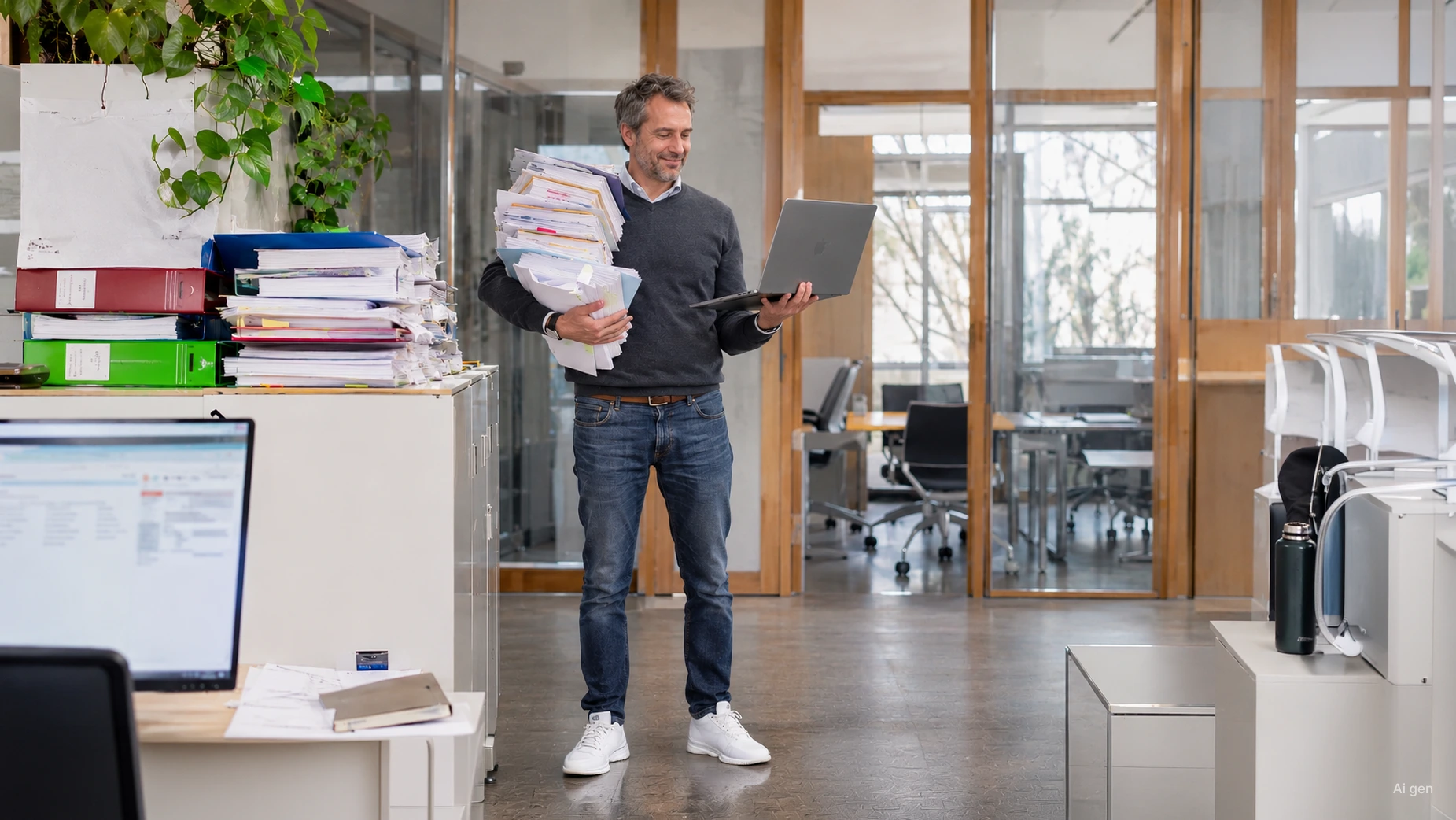
Managing a physical binder seems straightforward until you need to retrieve a contract revision from four years ago. Paper occupies valuable square footage, deteriorates, risks damage from moisture or fire, and lacks any access log. If an employee takes a technical document and forgets to return it to the correct folder, that information is effectively lost to the entire company.
In the daily operations of an SME, the difference lies not in the visual medium, but in accessibility and control. The retention obligation established by Article 2220 of the Italian Civil Code requires companies to keep invoices, letters, and registers for ten years from the date of the last entry. Keeping physical binders for a decade means tying up entire rooms of the building as mere passive storage.
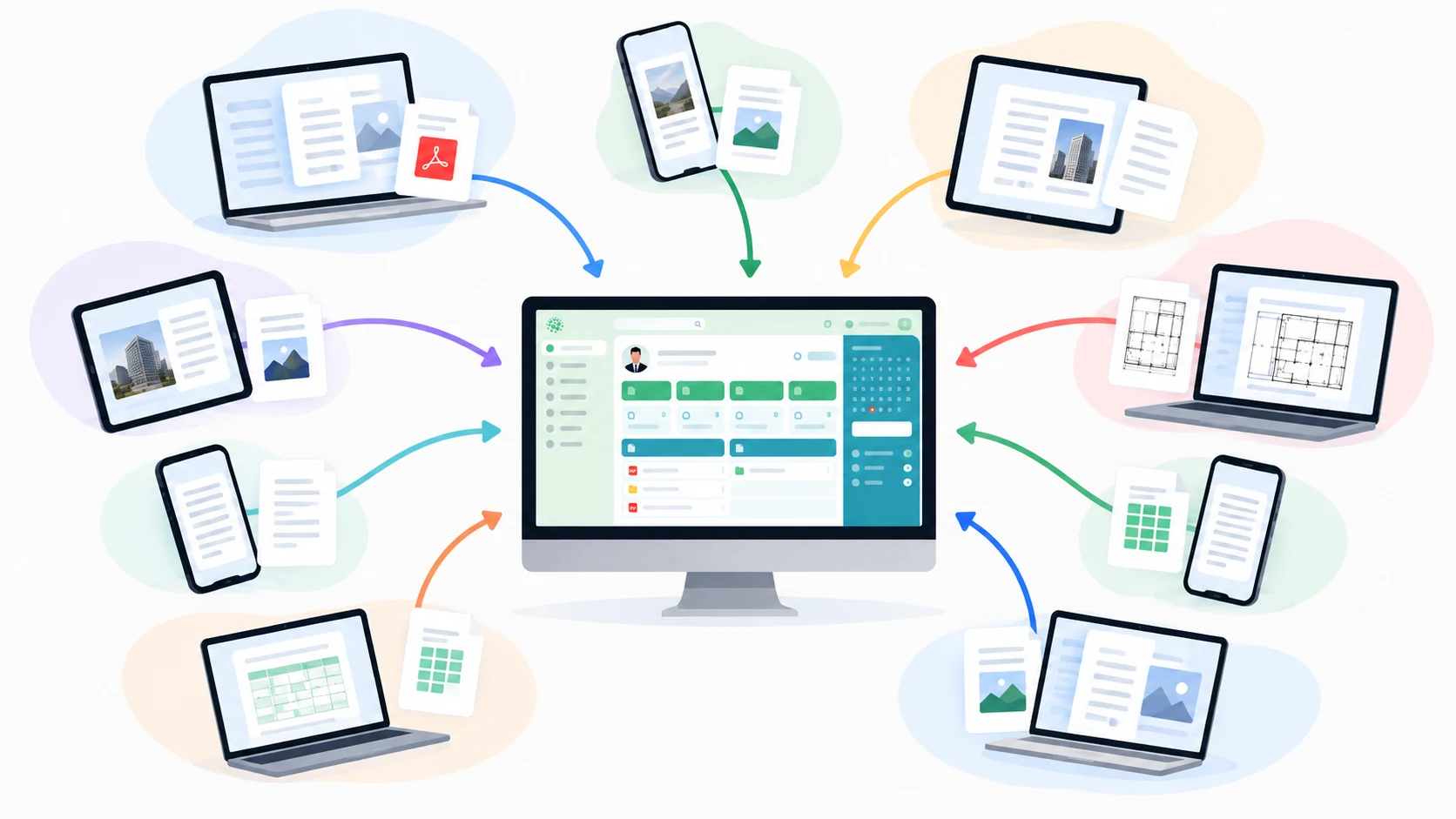
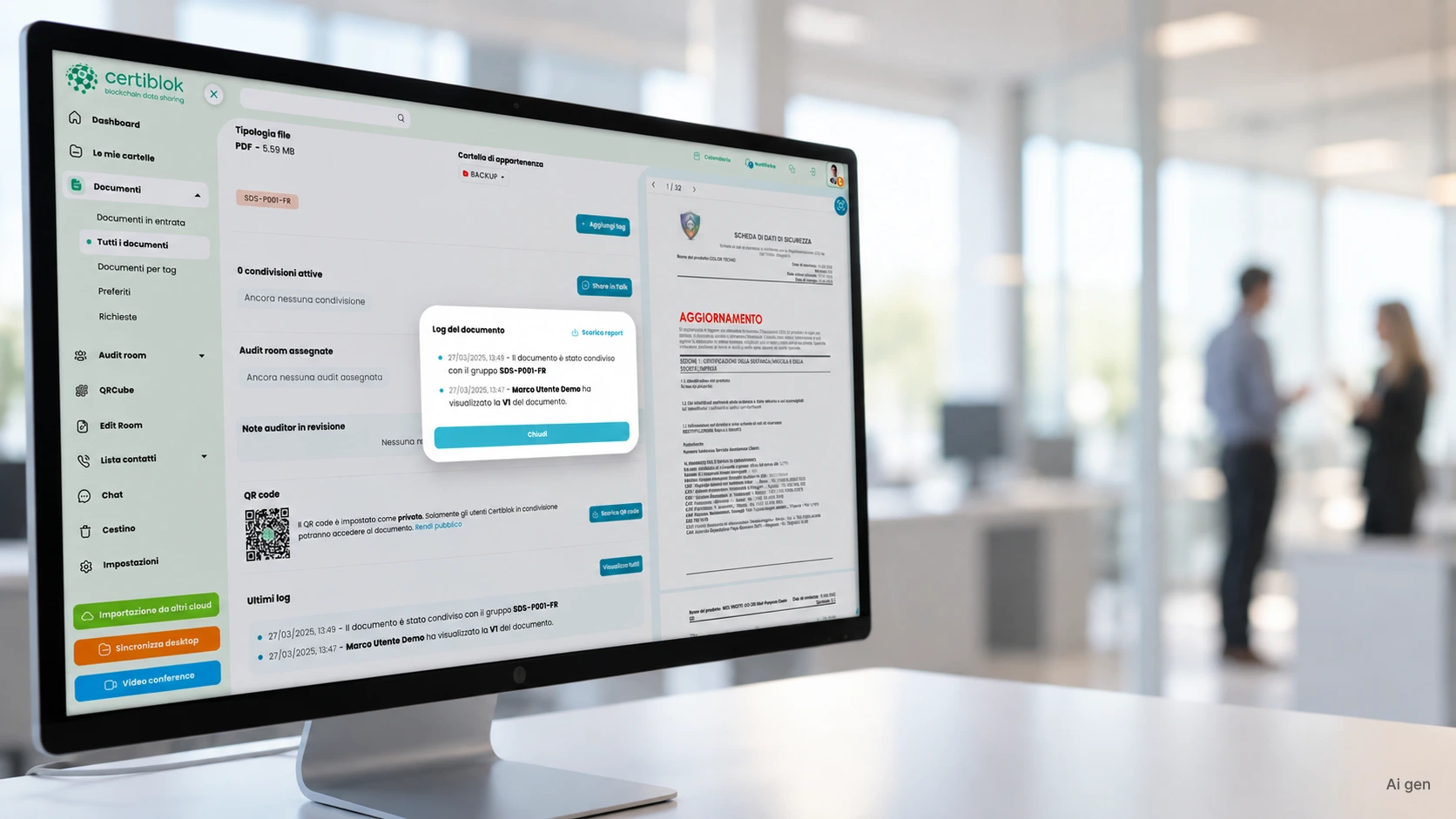
Switching to digital document management turns a static archive into an operational system that can be searched instantly. A properly archived file includes change history, certain upload dates, and access logs—elements impossible to replicate on paper without manual registers prone to human error.
How much does it really cost to maintain a paper archive?
Many administrative managers consider a paper archive to have no out-of-pocket costs simply because the shelving has already been amortized. The real expense is hidden in the working hours spent printing, cataloging, inserting dividers, and searching for misplaced sheets among the shelves.
Added to these items are the indirect costs of duplication. When an auditor, external consultant, or inspector requests access to a production batch, standard practice involves photocopying dozens of pages to create a temporary second file. Field data indicates that a structured archive enables a 40% reduction in audit time compared to paper-based consultation, freeing up working hours for technical and administrative staff.
What does the law say about retention and traceability?
Italian and European legal frameworks require not only possessing the document, but also ensuring its integrity over time. Article 5 of the General Data Protection Regulation of the European Union establishes the principle of confidentiality and integrity: personal data must be protected against unauthorized access and accidental loss. A locked cabinet in an office provides no tracking of who extracted a personal record.
In industrial supplies and machinery, recent regulations strongly push towards phasing out printed manuals. For example, the European Union Machinery Regulation 2023/1230, which will become applicable from January 20, 2027, expressly allows instructions for use to be provided in digital format. However, the manufacturer must ensure that the documentation remains accessible online for at least ten years from the date of placing on the market. Maintaining a static link or sending attachments via email does not ensure that the end customer consults the correct revision.
Comparison table: paper vs. digital archiving
| Operational parameter | Paper archive | Protected digital archive |
|---|---|---|
| Average file retrieval time | From 15 to 45 minutes per binder | Immediate via metadata search |
| Access and viewing tracking | None or via signature on a paper log | Automatic logs by user, date, and time |
| Revision management | High risk of mixing obsolete versions | Automatic versioning with protected history |
| Operating space and footprint | Linear meters increasing every year | No physical footprint in company premises |
| Audit and inspection preparation | Photocopies, moving binders, and dedicated rooms | Confidential access via temporary Audit Rooms |
| Sharing with external parties | Postal mailing or manual scanning | Protected link with viewing permissions |
How is digital data security guaranteed?
Digitizing does not mean accumulating PDF files in unprotected shared network folders. Makeshift sharing exposes the company to severe cyber risks. According to the Cost of a Data Breach 2024 report published by IBM, the average cost of a data breach in the European Union reached €4.5 million.
To provide real value, the digital architecture must prevent accidental loss and tampering. Platforms like Certiblok® apply AES 256 standard encryption. Files are split into 80 fragments distributed across a decentralized network of 26,000 nodes, with contractual geofencing that binds the nodes used within the European Union to comply with EU regulations. This model ensures that no single node retains the complete document. Only 29 fragments are needed to reconstruct the original file, offering business continuity even in the event of individual node failures.
If a cyberattack hits a local workstation and a version encrypted by ransomware is uploaded to the platform, the previous version remains preserved and recoverable thanks to the native versioning system.
When is it worth switching to digital archiving?
The transition to digital becomes essential when specific organizational conditions arise:
- When the company manages more than fifty complex files per month with technical attachments, certificates, and declarations of conformity.
- When distributed teams, external work sites, or branch offices need to access the same documents without physical handoffs.
- When clients require frequent updates to product documentation, such as technical data sheets, manuals, and safety data sheets.
- When preparing for ISO certification audits or safety inspections requires days of work to collect signatures and paper forms.
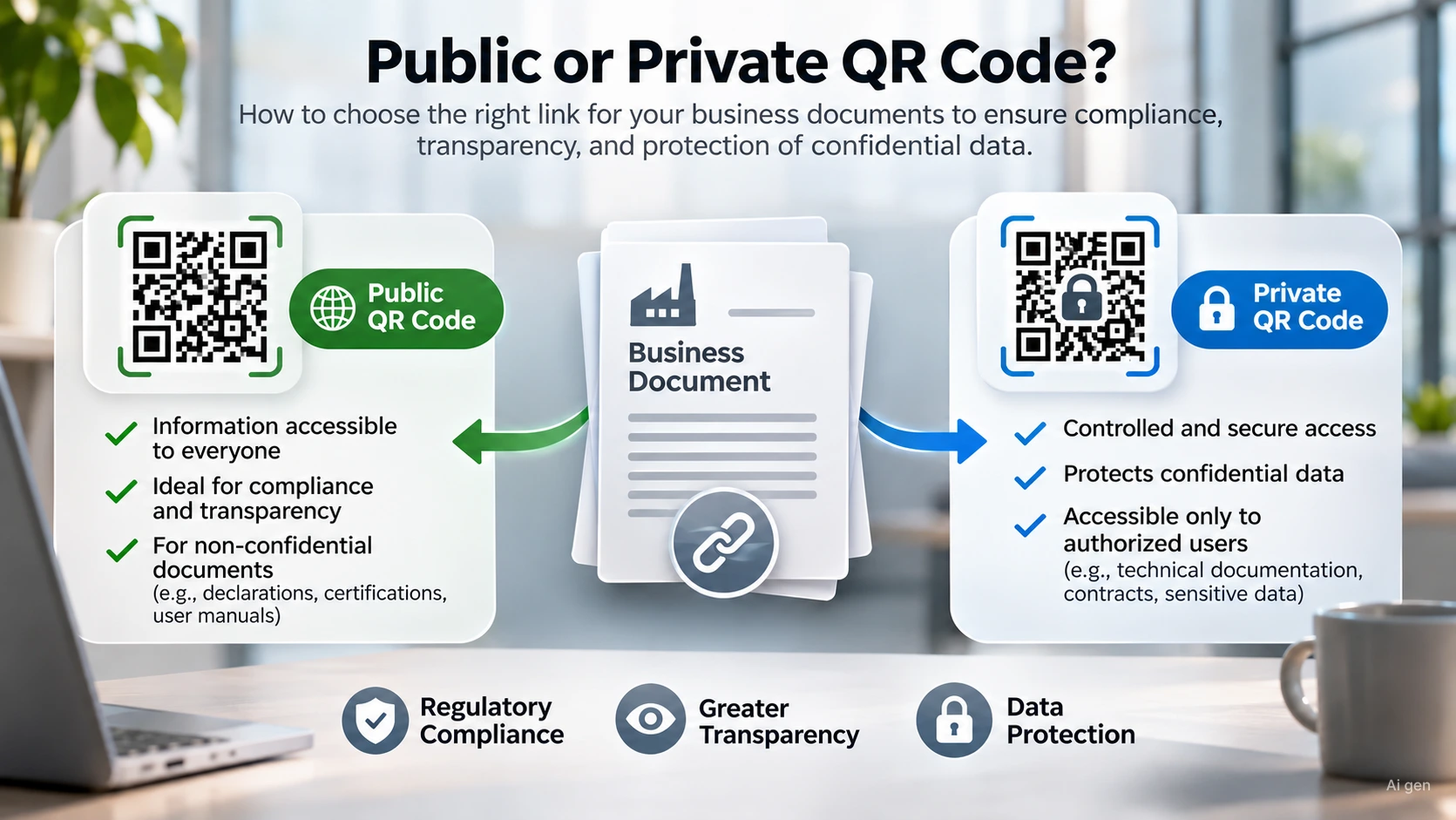
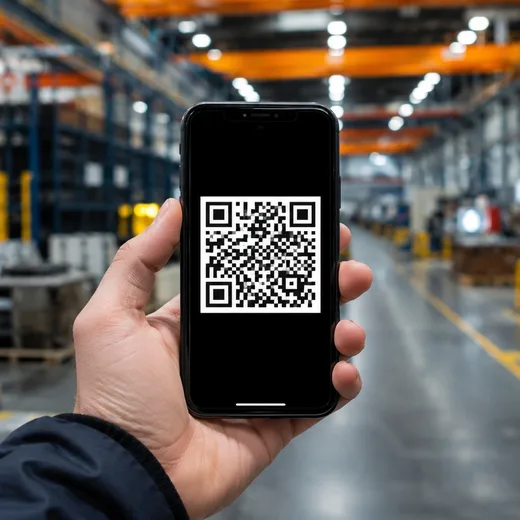
A clear example involves managing revisions in the field. Applying a QR code linked to a single PDF file exposes you to the risk of continuous reprinting. Conversely, tools like QRcube allow you to link a dynamic container to the machinery or product: the code applied to the nameplate remains identical, while the internal files can be updated over time, always displaying the valid official version.
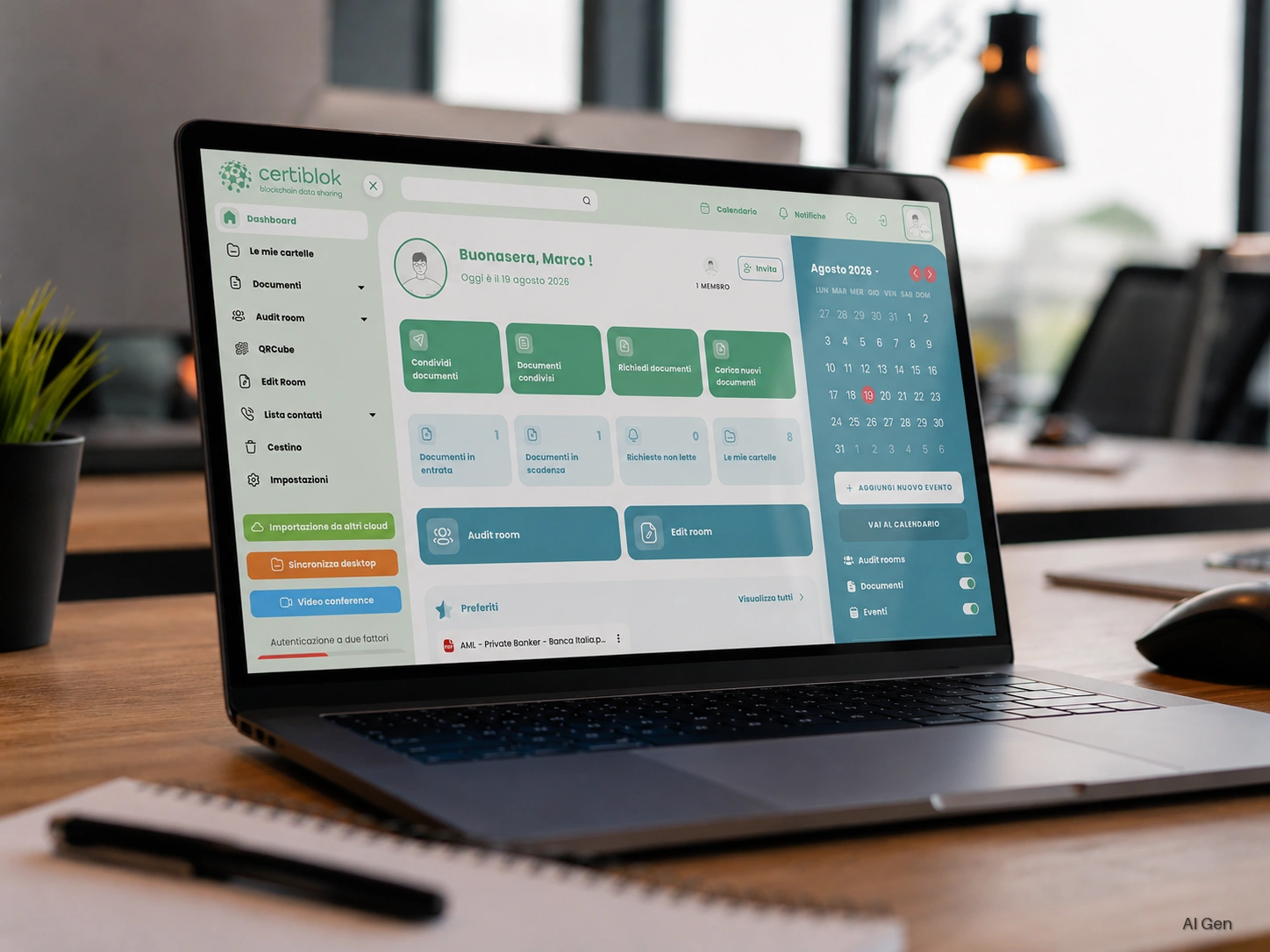
Managing inspections also changes radically. Instead of allowing consultants or auditors to browse the entire archive, the Audit Room feature enables you to isolate the necessary files, assign temporary read-only permissions, and obtain a report with the full consultation history at the end.
Frequently Asked Questions
Do scanned documents always replace paper originals?
A simple scan in image or PDF format does not automatically equate to digital preservation with full evidentiary value for all notarial or special corporate deeds. For the routine management of projects, technical manuals, delivery notes, and operational correspondence, the digital archive delivers full operational and contractual validity, allowing evidence to be retrieved immediately.
What happens if a team member accidentally overwrites a file?
In systems equipped with DRM technology and version control, documents cannot be modified, only updated. Each new upload generates a tracked progressive version, while previous historical revisions remain archived and always retrievable to verify who made the changes.
How are documents shared with external suppliers who don't have an account?
Certiblok®'s sharing feature allows you to send documents or request files from external parties without requiring them to register on the platform. The recipient is notified of any version updates, while the sender maintains full visibility over access and download logs.
Does digitization involve risks related to data breaches?
Risks arise when using unstructured tools such as unprotected email attachments or shared folders without tiered credentials. The use of AES 256 encryption combined with decentralized fragmentation drastically reduces the vulnerability of an individual archive compared to the exposure of on-premises physical servers.
Would you like to evaluate how to eliminate paper binders and protect your company's documentation with granular permissions and complete traceability? Speak with our specialists and request a hands-on demo by contacting our team.