





ISO 9001 certification is an international recognition that attests to the conformity of a company's quality management system with the requirements of the ISO 9001 standard. Obtaining ISO 9001 certification can bring numerous benefits to a company:
- higher quality of products and processes,
- increased customer satisfaction,
- higher productivity.
Note: on 16 September 2026, ISO published ISO 9001:2026, the sixth edition of the standard, which replaces ISO 9001:2015. Organizations already certified to the 2015 version will have a transition period to adapt to the new edition.
In this article, we look at how to obtain ISO 9001 certification and the steps required to do so.
1. Understand the requirements of the ISO 9001 standard
The first step to obtaining ISO 9001 certification is understanding the requirements of the standard. ISO 9001 sets out the requirements for an effective quality management system, which must be based on principles such as customer focus, staff involvement, process management and continuous improvement, together with the risk-based approach.
2. Implement a quality management system
Once the requirements of the standard are understood, the company must implement a quality management system that meets them. This means the company must define its quality policy, set quality objectives, identify the processes of the quality management system and define the standard operating procedures to manage them.
3. Train the staff
Company staff are a key element for the success of the quality management system. It is important to train staff on the requirements of the ISO 9001 standard and on standard operating procedures, giving them the skills and knowledge needed to implement the quality management system successfully.
4. Carry out the internal audit
Before the certification audit, it is important to carry out an internal audit to verify that the quality management system has been implemented correctly and meets the requirements of the ISO 9001 standard. The internal audit must be conducted by internal staff or an external consultant, in order to identify any issues and correct them before the certification audit.
5. Carry out the certification audit
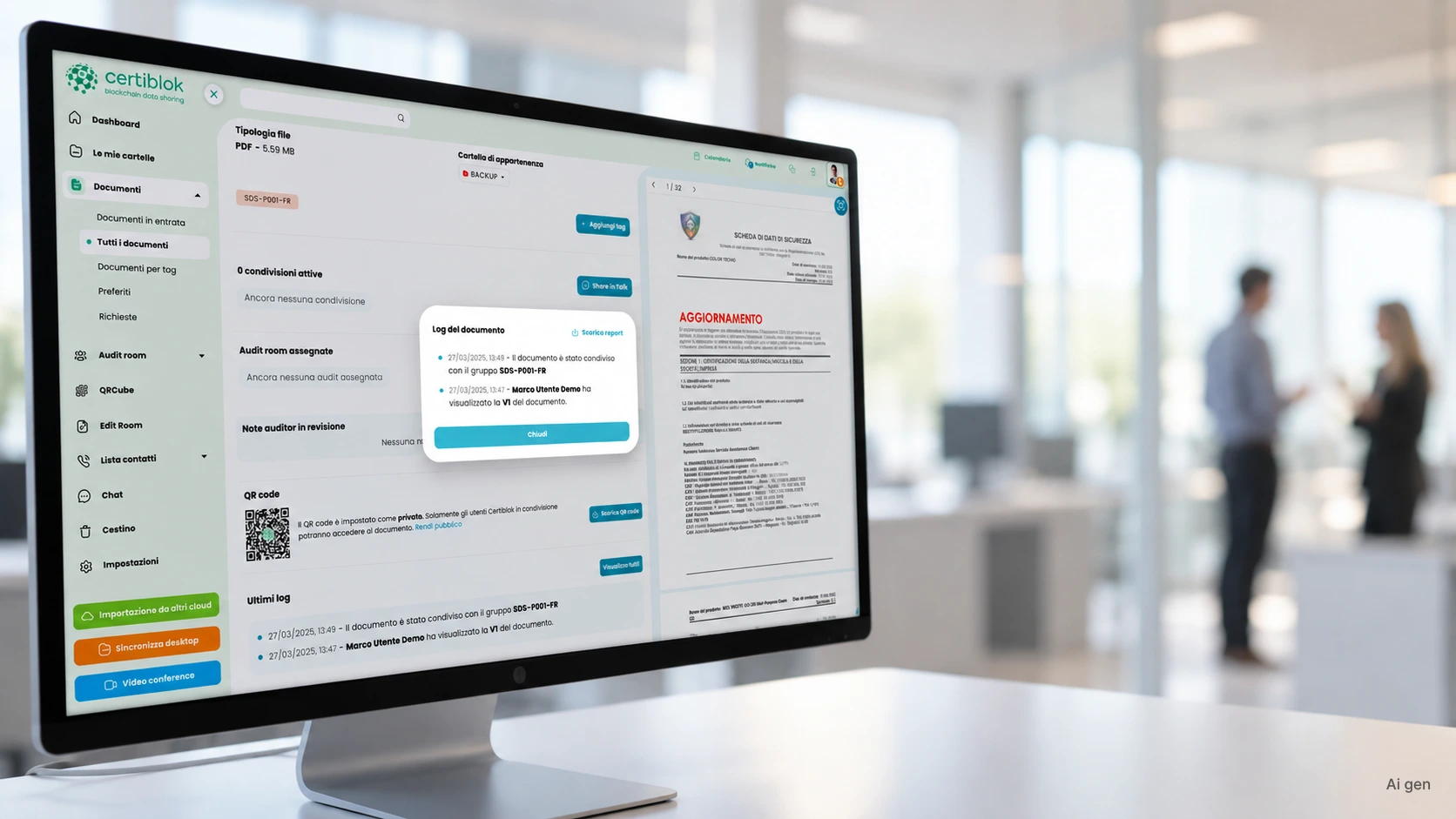
The certification audit is carried out by an independent certification body that verifies whether the company's quality management system meets the requirements of the ISO 9001 standard. During the audit, the auditors check the documentation, the processes and the conformity of the quality management system with the standard's requirements. Thanks to digital tools that allow document sharing and real-time communication between the auditor and the audited company, remote audits are possible. A remote audit is a verification procedure conducted at a distance, without the physical presence of the auditor. The Certiblok® platform can be a valuable support for remote management. Thanks to its document repository functionality and its secure architecture, Certiblok® makes it possible to share the documents requested by the auditor simply and quickly, ensuring the traceability and integrity of the documents themselves.
6. Address any non-conformities
During the certification audit, non-conformities or issues may emerge that the company must address. In this case, the company must implement corrective actions to resolve the non-conformities and ensure ongoing conformity of the quality management system.
In conclusion, obtaining ISO 9001 certification requires a significant commitment from the company, but it can bring numerous benefits for the quality of products and processes, customer satisfaction and productivity.
For smart management of the entire process, Certiblok® is the ideal solution for companies that want to start and maintain a certification process, helping them organize the documentation related to the requirements of the ISO 9001 standard. Thanks to its user-friendly interface, its integrated video communication system and its simplified document management, Certiblok® is the reference platform for remote audits and ISO 9001 certification management.