





Most of us have already used Single Sign-On without realizing it: for example by clicking "Sign in with Google" to enter a new web service or a business application, without creating yet another account. Many websites offer the option to register through external accounts such as Google, Apple or Microsoft. But what exactly does Single Sign-On mean and how does this integration work? Let's find out.
What is Single Sign-On (SSO)?
Single Sign-On (SSO) is an authentication mechanism that allows a user to access multiple applications with a single login. In practice, the user authenticates once with a single set of credentials (typically a username and password) and gains access to different websites or software during the same session. In other words, SSO lets you use one account for multiple services without having to log in again each time. This simplifies user authentication, improves the user experience and — when well implemented — also strengthens security.
SSO with Google and Microsoft: how does the integration work?
At the heart of SSO is a trust relationship between the application you want to access (called the service provider) and an external identity provider (IdP) such as Google or Microsoft. When you choose, for example, "Sign in with Google", the platform redirects the authentication request to Google. After you enter your Google credentials, Google verifies your identity and tells the original service that access can be authorized, typically through a security token. In this way the external provider vouches for your identity, and the destination application trusts the response it receives. This integration uses standard protocols (such as OAuth2/OpenID Connect or SAML) that ensure a secure exchange of login information.
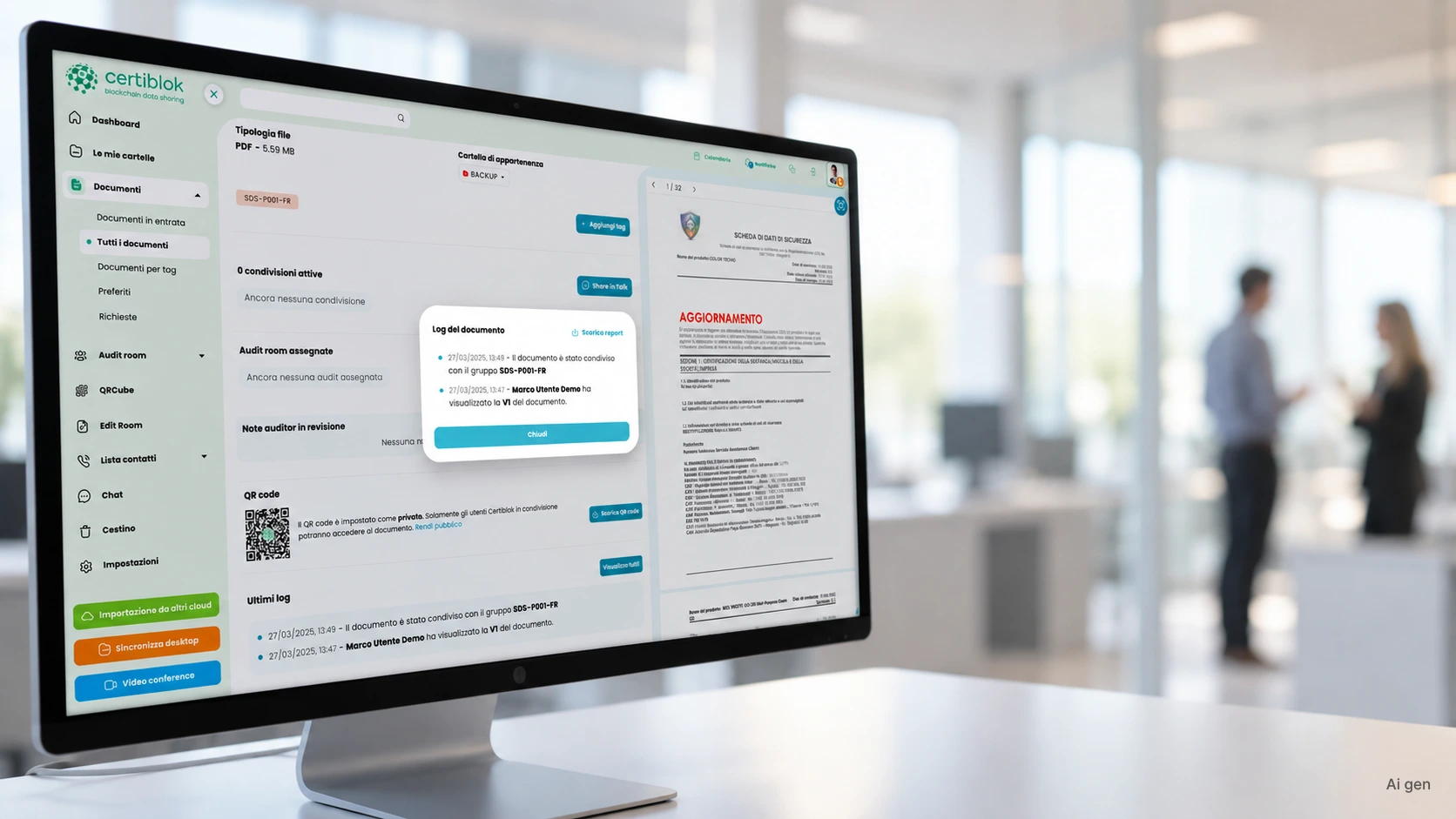
Note that this feature is already active on our Certiblok® platform. This means you can access your Certiblok® account using your Google or Microsoft account credentials, without needing to create a dedicated username or password. The result is a faster and more secure login on Certiblok® as well, thanks to the trust established with these providers.
Benefits of SSO for users and administrators
Implementing Single Sign-On brings several benefits both to those who access services and to the IT teams that manage them:
Greater security: SSO reduces password-related risks. Users no longer have to manage dozens of passwords (avoiding the dangerous practice of reusing the same credentials on different sites), and administrators can enforce uniform security policies — for example requiring multi-factor authentication on all company access. In short, fewer passwords in circulation means fewer chances of breaches.
Fewer passwords to remember: with Single Sign-On each person has only one main password to memorize. This simplifies life for users, reducing the so-called "password fatigue" caused by too many credentials to remember. Less stress managing passwords also translates into fewer reset and support requests.
Centralized access management (for IT teams): SSO gives companies centralized control over who can access the various systems. For example, you can give a new employee a single company account to enter all the necessary applications, assigning the appropriate permissions from a single control panel. Likewise, when someone leaves the company, simply disabling their single account revokes access to all resources, simplifying security and compliance operations.
Better user experience: users benefit from a smoother experience. Without repeated logins on every service, using applications becomes immediate and seamless. A single access removes friction: users can move from one app to another to work or use new services without further obstacles, increasing their satisfaction and productivity.
Single Sign-On is a win-win solution: it improves security and simplifies life for both end users and technical teams. Since SSO is already available on Certiblok®, you can immediately take advantage of simpler and more secure access to the platform — for example, by signing in with your Google account instead of creating yet another password. This means fewer credential headaches and an optimized user experience, with no compromises on security.