





Certiblok — Document compliance platform
Start free
MACHINERY REGULATION

(EU) 2023/1230

Is your documentation really ready for January 20, 2027?

Ready for the new Machinery Regulation?

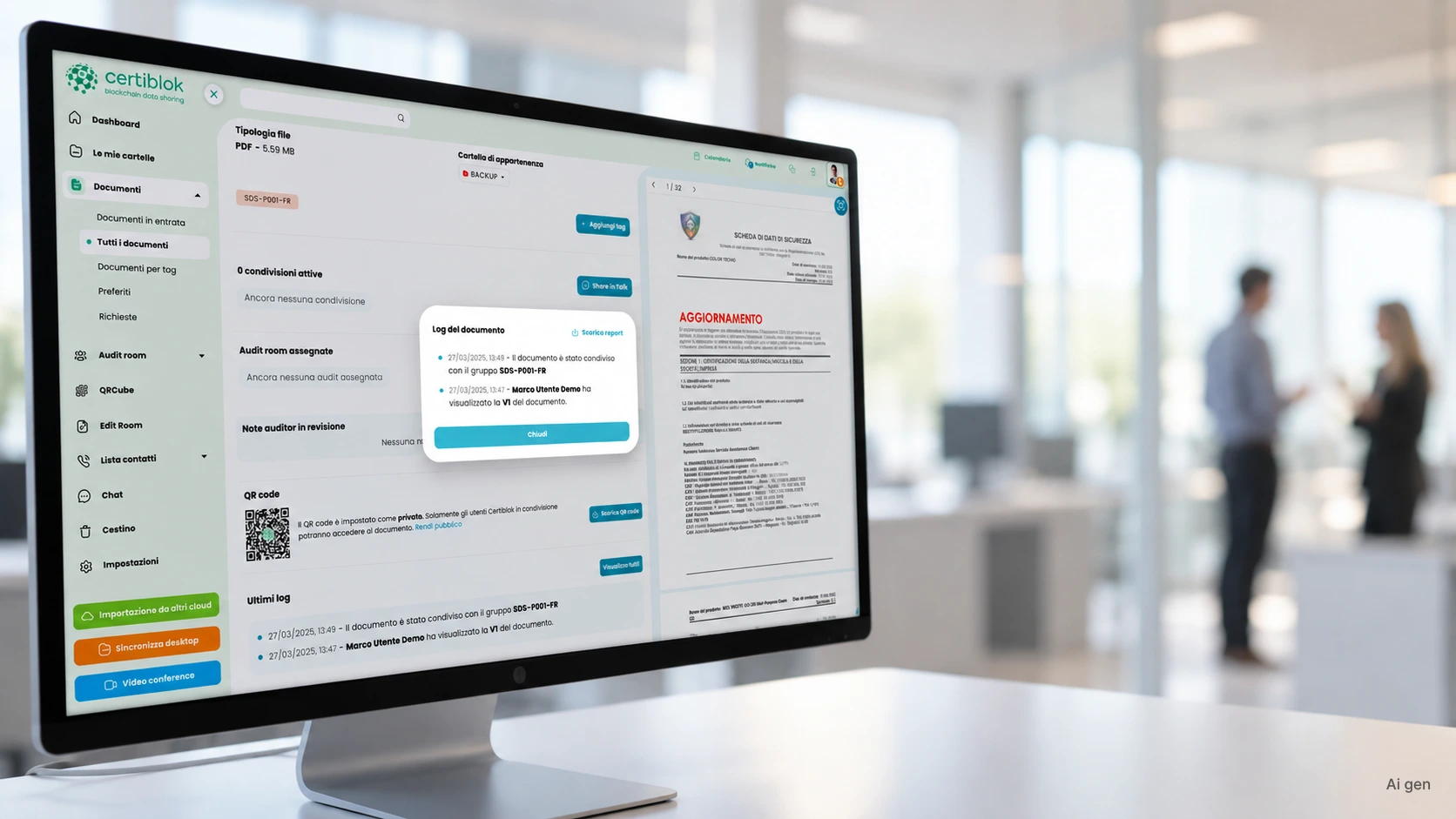
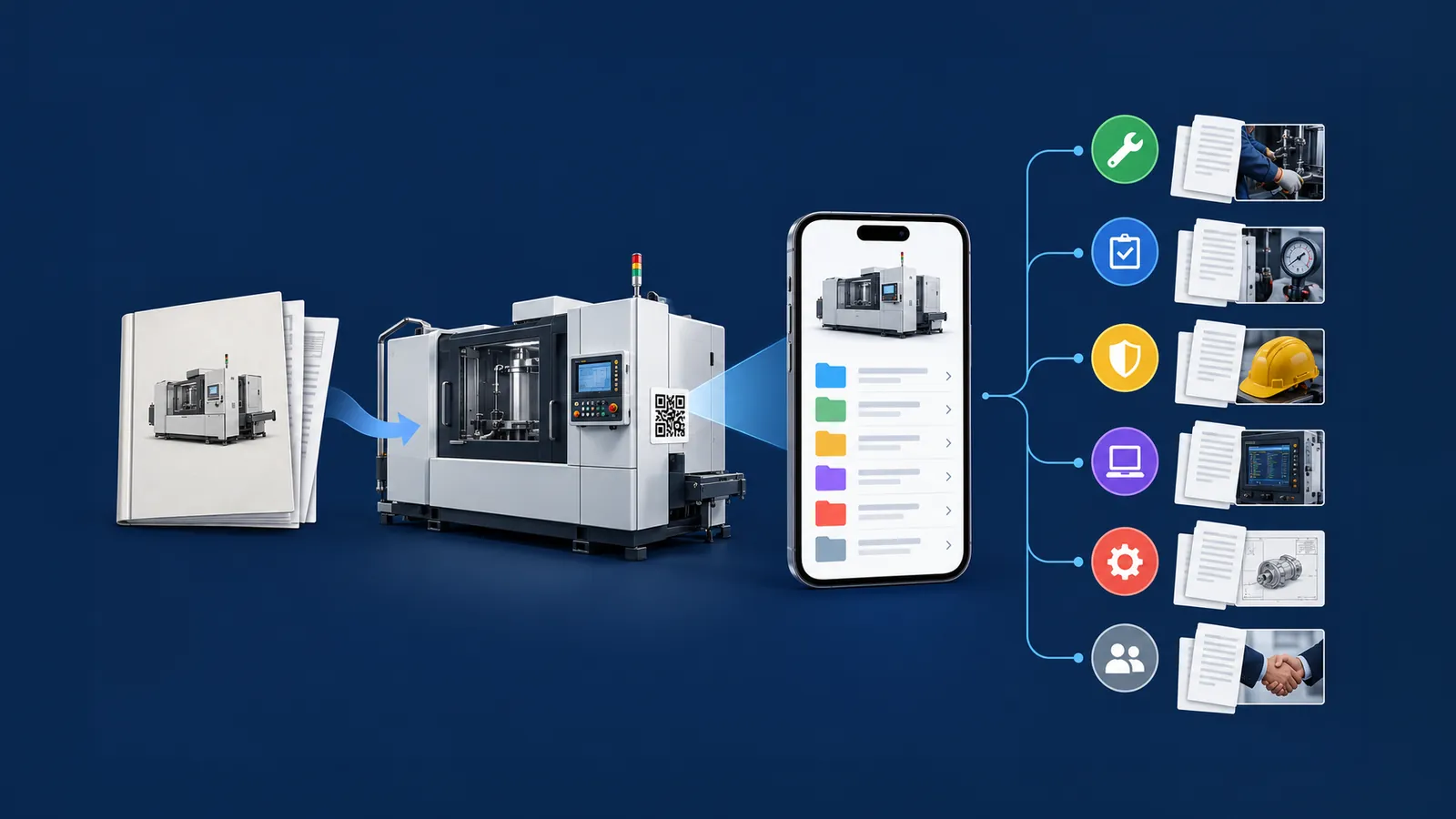
From 2027 you can deliver machinery documentation digitally. QRcube helps you do it in a compliant and traceable way, with the paper version always available when needed.

Contact us

SDS – Safety Data Sheets

Delivering the sheet to the customer isn't enough: every update must be resent to all recipients supplied in the last 12 months. Missing an update: administrative fines up to €60,000.

Distribute SDS with no risk

With SDS Manager you send sheets to your customers, propagate updates to those who received them and keep proof of every transmission. Fully tracked, always compliant.

Contact us
PlansCertiblogAboutPartnerContact
Start free

Calculating the carbon footprint of corporate data storage

· by Certiblok

Share:

Why it matters to calculate the carbon footprint of your data

According to IDC projections, 64.2 zettabytes of data were generated or replicated globally in 2020, with a compound annual growth rate of 23% forecast between 2020 and 2025 — over 180 zettabytes expected by 2025. Every company produces and stores a growing volume of documents, databases, emails and backups, and this volume carries an environmental cost as well as an economic one.

Global data centres consume around 416 terawatt-hours of energy per year, with some estimates reaching up to 770 terawatt-hours. Of this consumption, only 11% is directly attributable to powering storage drives: 43% goes to servers and 43% to cooling and power systems. A significant share of the energy used for cooling and processing is nevertheless related to data management.

One often underestimated factor: NRDC and IBM statistics indicate that servers operate on average at only 12-18% of their capacity, while consuming almost the same energy they would at 80%. A large part of the storage capacity already manufactured worldwide therefore remains underused.

Manufacturing the hardware weighs more than using it

Energy consumption during use is not the main item in the carbon footprint of storage. A life cycle analysis of a 1TB Seagate Momentus drive shows that only 16% of the climate impact comes from operational energy consumption. The rest comes from:

  • Material extraction and pre-processing: 62%
  • Assembly: 11%
  • Transport and distribution: 8%
  • Disposal and recycling: 3%

Another study (Tannu and Nair, on the embodied carbon of SSDs) estimates that manufacturing 1 TB of HDD capacity generates around 20 kg of CO₂, to which a further 76 kg of CO₂ is added to power that capacity over a five-year useful life. According to the same research, reusing drives is the end-of-life strategy with the greatest environmental benefit: around 5 kg of CO₂ saved for every six months of extended useful life.

It should also be considered that most cloud storage providers replicate data at least 3 times to guarantee durability (the 3-2-1 backup rule), and this factor multiplies further when data must be distributed across several geographical regions. One functional TB of data can therefore require 3 TB (or more) of actual physical capacity, with the related carbon cost.

How Certiblok®'s decentralised storage works

Certiblok® provides S3-compatible cloud object storage that leverages already existing, independently managed drive capacity worldwide, instead of requiring new dedicated capacity to be built. The system works like this:

  1. Files are encrypted end-to-end (AES-256-GSM) and segmented into 64 MB units
  2. Each segment is split into 80 fragments through Reed-Solomon erasure coding
  3. The fragments are distributed across different, geographically dispersed drives
  4. The file can be reconstructed from just 29 of the 80 fragments

Instead of traditional 3-2-1 replication, this approach produces an effective expansion factor of 2.7x (80/29) rather than 3x or more, while still maintaining durability above 11 "nines" (99.999999999%) — which includes protection against risks affecting entire geographical areas, such as fires, floods or power outages.

Our analysis identifies five main levers through which this model reduces emissions:

  • Optimisation of existing capacity: a share of the Certiblok® network comes from drives already in operation, with minimal incremental carbon impact
  • Life cycle extension: drives are used beyond the traditional 3-5 year limits, with failures handled through erasure coding
  • Reduced replication: a 2.7x factor against the 3x (or more) of traditional approaches
  • Optimisation of geographical distribution: fragments are already distributed globally, with no need for dedicated regional copies
  • Smart HDD-SSD balancing: since the life cycle carbon cost of an SSD is about twice that of an HDD, reducing the share of SSD cache where it is not needed generates further savings

The numbers: how much you really save

Our calculation model compares the carbon impact of one TB of data stored for 3 years in four scenarios: Hyperscaler, corporate Data Centre, Certiblok® Standard (drives already supplied and powered) and Certiblok® Blended (weighted mix of network profiles).

ComparisonTraditional approach (kg CO₂/TB, 3 years)With Certiblok® (kg CO₂/TB, 3 years)Reduction
vs. Hyperscaler36215 (Certiblok® Standard)-95%
vs. corporate Data Centre67915 (Certiblok® Standard)-98%
vs. Hyperscaler362112 (Certiblok® Blended)-66%
vs. corporate Data Centre679112 (Certiblok® Blended)-83%

Certiblok® Standard: drives already supplied and powered. Certiblok® Blended: weighted mix of network profiles (Standard, Reused, New Nodes).

To give a practical scale to these numbers: a car produces around 0.24 kg of CO₂ per kilometre travelled. The saving achievable on a single TB of actual storage, in the most conservative scenario, is therefore equivalent to the emissions of around 1,000-2,000 km of car travel.

Environmental impact

Calculate the CO₂ you save with Certiblok

Storing data has a real environmental cost: corporate servers and hyperscale clouds burn energy 24/7 to keep online information that, in most cases, is rarely accessed.

Certiblok distributes your documents across a decentralized network that reuses existing storage capacity, drastically cutting CO₂ emissions compared to traditional architectures.

  • Compare Certiblok in real time vs cloud and on-prem servers
  • Based on verifiable LCA parameters (NRDC, IBM, Seagate, IDC)
  • Result shown in kg of CO₂ and equivalent car kilometres
Calculation formula (Certiblok 2024)
CO₂ = (EMCEMD) × C × (T / 3)
EMC = Emissions of traditional mode (kg CO₂ / TB / 3 years)
EMD = Certiblok emissions (kg CO₂ / TB / 3 years) = 112 kg
C = Capacity in TB  ·  T = Years of retention
How the Certiblok value is calculated (112 kg CO₂ / TB / 3 years)
The value reflects the real network composition — a weighted mix of three node categories:
Standard nodes — already-powered, unused capacity (21% of the network)2,0 kg CO₂/TB/a
Reused nodes — old drives brought back online (20.8% of the network)15,8 kg CO₂/TB/a
New nodes — new drives added to the network (58.2% of the network)18,7 kg CO₂/TB/a
Weighted average (real network) × 3 years= 112 kg CO₂ / TB
The Certiblok expansion factor is 2.7× (Reed-Solomon 80/29), against 3–4× for traditional systems. Estimated utilization: 85% (Certiblok) vs 40% (on-prem) and 75% (hyperscaler).
Reference parameters
On-prem server
679 kg CO₂ / TB / 3a
Hyperscale cloud
326 kg CO₂ / TB / 3a
Certiblok
112 kg CO₂ / TB / 3a
HDD manufacturing
20 kg CO₂ / TB
Operating energy
36,8 kWh / year / TB
Energy emission factor
0,7 kg CO₂ / kWh
Step-by-step calculation for your data
Capacity (C)1,00 TB
Years (T)3 years
Time factor (T / 3)1,00
On-prem server emissions679 × 1,00 × 1,00 = 679 kg
Hyperscale cloud emissions326 × 1,00 × 1,00 = 326 kg
Certiblok emissions112 × 1,00 × 1,00 = 112 kg
Saving vs hyperscaler214 kg CO₂ (66%)
Saving vs on-prem server567 kg CO₂ (84%)
Source: Certiblok LCA analysis (2024). Data: NRDC, IBM, Seagate LCA (Momentus 1TB), IDC Global DataSphere Forecast 2022-2026, Tannu & Nair — “The Dirty Secret of SSDs: Embodied Carbon” (2023). Conservative estimates.

How much CO₂ do you save by choosing Certiblok?

Enter your data and discover the real environmental impact

TB
GB TB
1 TB = 1,024 GB
3 years
CO₂ saved by choosing Certiblok
vs. Hyperscale cloud
500 333 167 0 kg CO₂ 326 112 Hyperscaler Certiblok
214kg CO₂
saved
66%
vs. On-prem server
1000 667 333 0 kg CO₂ 679 112 On-prem Certiblok
567kg CO₂
saved
83%
Total emissions compared
On-prem server679 kg CO₂
Hyperscale cloud326 kg CO₂
Certiblok112 kg CO₂
In practical terms
With 1 TB / 3 years you save 567 kg CO₂ compared to an on-prem server — like avoiding 2,363 km by car.

These are good-faith estimates — carbon savings cannot be measured precisely — but they are calculated with a deliberately conservative approach (for example using the higher range of data centre utilisation estimates, which makes the comparative results less favourable to Certiblok® than they could be).

Towards more sustainable document management

Measuring and reducing the carbon footprint of data storage is not only about producing new capacity: it is also about how existing capacity is used. Our data indicates that optimising utilisation, reducing the replication factor and extending the useful life of drives are concrete, measurable levers, even before talking about renewable energy or data centre efficiency.

Want to find out how Certiblok® can help you reduce the carbon footprint of your document archive?
Contact us for a personalised consultation.

FAQ

Why is it important to calculate the carbon footprint of corporate data storage?
Because most of the environmental impact of storage does not come from simple energy consumption in use, but from the manufacturing of the devices (up to 84% of a drive's climate impact, according to life cycle analysis) and from the data replication factor.
Which factors influence the calculation of the storage carbon footprint?
The operational energy consumption of the drives, the impact of manufacturing and material extraction, the data replication/expansion factor, the actual capacity utilisation rate and the useful life of the hardware.
How can decentralised storage reduce the carbon footprint?
By leveraging already existing drive capacity instead of requiring new dedicated production, by reducing the expansion factor for replication (2.7x against 3x or more) through erasure coding, and by extending the useful life of devices beyond traditional limits.
How much do you actually save with Certiblok® according to the model?
Between 66% and 98% of CO₂ emissions per TB over a 3-year period, depending on the comparison scenario (hyperscaler or corporate data centre) and the Certiblok® network profile considered (Standard or Blended).

Text generated with AI assistance and reviewed by a human.