




Introduction to the EU AI Act and its Implications
Artificial Intelligence (AI) is rapidly transforming every sector, from manufacturing to finance, healthcare to services. But with innovation come new challenges, especially regarding ethics, security, and data privacy. The European Union has responded to these challenges with the EU AI Act, a regulation that aims to establish a clear regulatory framework for the use of AI within the EU.
Regulation (EU) 2024/1689 entered into force on 1 August 2024. Prohibitions apply from 2 February 2025 and obligations for general-purpose AI models from 2 August 2025. Under the Digital Omnibus, in force since 27 July 2026, the rules for high-risk systems in Annex III apply from 2 December 2027 and those in Annex I from 2 August 2028.
This regulation, the first of its kind globally, is not just a bureaucratic formality. It sends a strong signal: AI must be developed and used responsibly, respecting fundamental citizen rights and ensuring safety. For businesses, this means rethinking not only how they implement AI solutions but also how they manage the data that fuels and is produced by these technologies.
Why Does the EU AI Act Affect Your Document Management?
You might wonder: what does an AI regulation have to do with my company's documents? The answer is simple: AI relies on data. Every AI system, from simple automations to complex machine learning algorithms, processes information. If AI makes decisions based on documents, manuals, reports, or customer data, the quality, integrity, and traceability of these documents become fundamental for its compliance.
The EU AI Act classifies AI systems based on their risk level. High-risk systems, such as those used in critical sectors (e.g., recruitment, credit management, essential infrastructure), are subject to more stringent requirements. These include the need for:
- Robust risk management systems: to identify and mitigate potential hazards.
- High data quality: data used to train and test AI must be relevant, representative, error-free, and complete.
- Traceability and human oversight: it must be possible to understand how an AI decision was made and intervene if necessary.
- Detailed technical documentation: to demonstrate compliance with the regulation's requirements.
All these points converge on document management. If your documents are disorganized, outdated, or difficult to trace, ensuring AI compliance becomes a complex and risky undertaking.
The Challenges of Document Management in the Age of AI
The adoption of AI introduces new challenges for data and document management. It's no longer just about storing files, but about ensuring they are AI-ready and compliant with regulations.
Data Integrity and Quality
AI systems are only as effective as the data they are based on. Incorrect or incomplete data leads to wrong decisions and, in the context of the EU AI Act, to non-compliance. This is particularly critical for sectors such as pharmaceuticals, where process documentation and test results must be impeccable, or engineering, with the need for constantly updated technical diagrams and manuals.
Traceability and Versioning
The EU AI Act requires the ability to trace how an AI system was developed, trained, and how it makes decisions. This implies rigorous control over the versioning of the documents used. If an AI model was trained on a specific version of a technical manual, you must be able to prove it and access that version, even years later. Imagine a law firm using AI to analyze contracts: every clause, every modification, must be traceable to its document origin.
Access and Security
AI often processes sensitive data. Ensuring that only authorized personnel can access documents and data, and that these are protected from unauthorized access or alteration, is fundamental. Data security is not just a matter of privacy (GDPR), but also of the integrity of the AI system itself.
Auditability and Reporting
In case of an audit or incident, you will need to demonstrate compliance with the EU AI Act requirements. This means having complete and easily accessible documentation of the entire AI development and usage process, including data, models, and decisions made. A manufacturing company using AI for quality control, for example, must be able to present records of all inspections and automated decisions.
How Certiblok® Addresses the Requirements of the EU AI Act
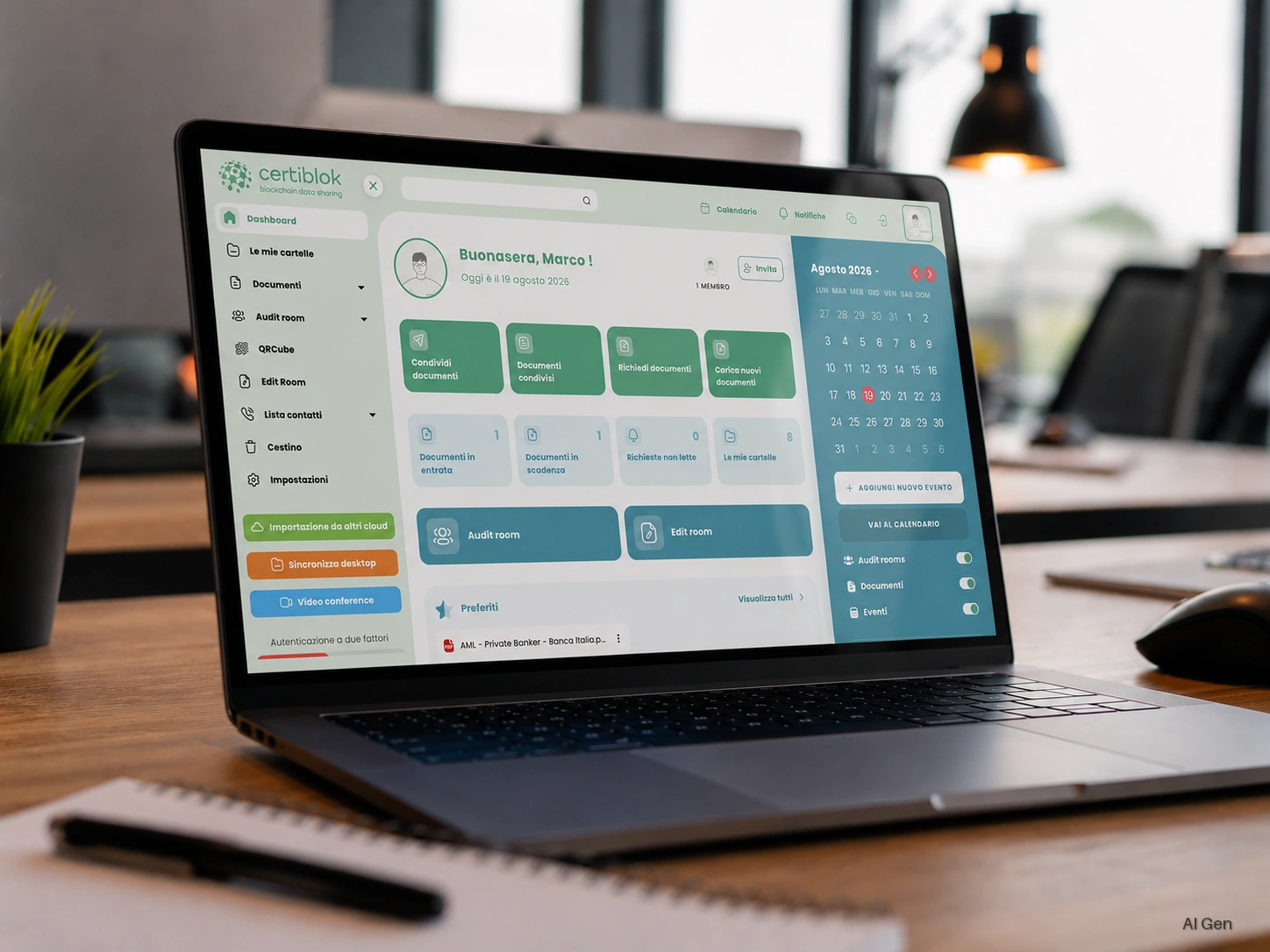
Certiblok® was designed with document security, integrity, and traceability in mind, elements that perfectly align with the EU AI Act requirements. The platform offers specific tools to address the challenges of document management in the age of AI.
DRM®: Guaranteed Integrity and Traceability
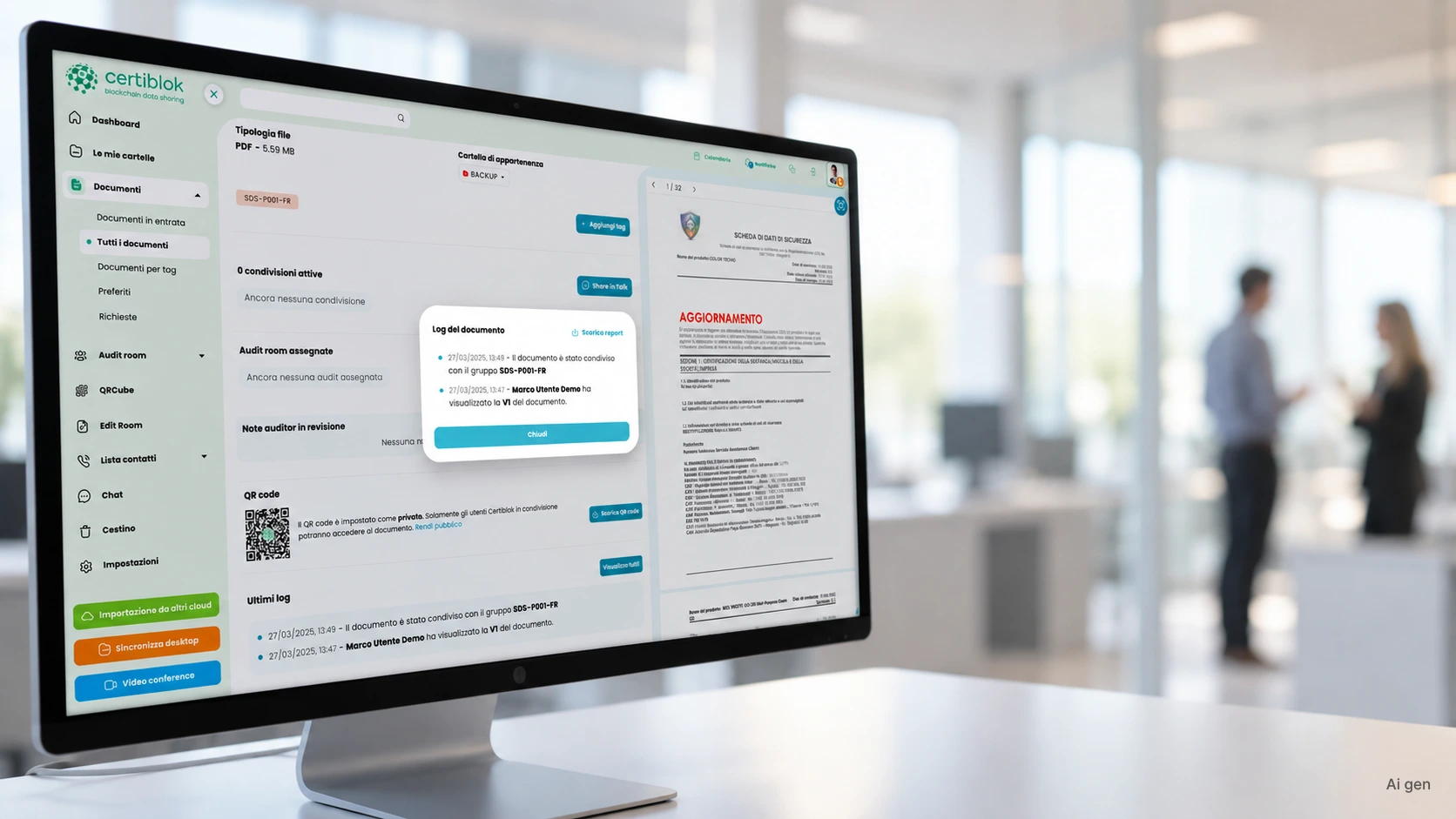
Certiblok®'s DRM® (Document Relationship Management) system is at the heart of compliance. Every file uploaded to the platform receives a unique and unchangeable "identity card." This includes:
- Registered owner: for complete traceability.
- Automatic versioning: all file versions are stored and accessible, ensuring you can always go back to the specific version used to train or validate an AI model.
- Activity log: every view and share is tracked, providing a complete history of interaction with the document.
This means that if an AI system has processed a document, you will have proof of the exact version and its history, a fundamental requirement for high-risk systems.
Secure and Decentralized Storage
Data security is a pillar of the EU AI Act. Certiblok® stores files on a decentralized cloud. This approach guarantees:
- Maximum security: files are fragmented into 80 parts, encrypted with AES256, and globally distributed across 26,000 nodes. This makes unauthorized access to complete data almost impossible.
- Reliability: the system is resilient to single failures and cyberattacks, ensuring operational continuity essential for AI systems that require always-available data.
- Integrity: Files are encrypted with AES-256, split into 80 shards and distributed on a decentralised cloud; each edit creates a new version, previous versions are retained and activity is logged.
For an insurance company that uses AI for claims analysis, the guarantee that policy and appraisal data are integral and protected is non-negotiable.
Controlled Sharing with QR Cube®
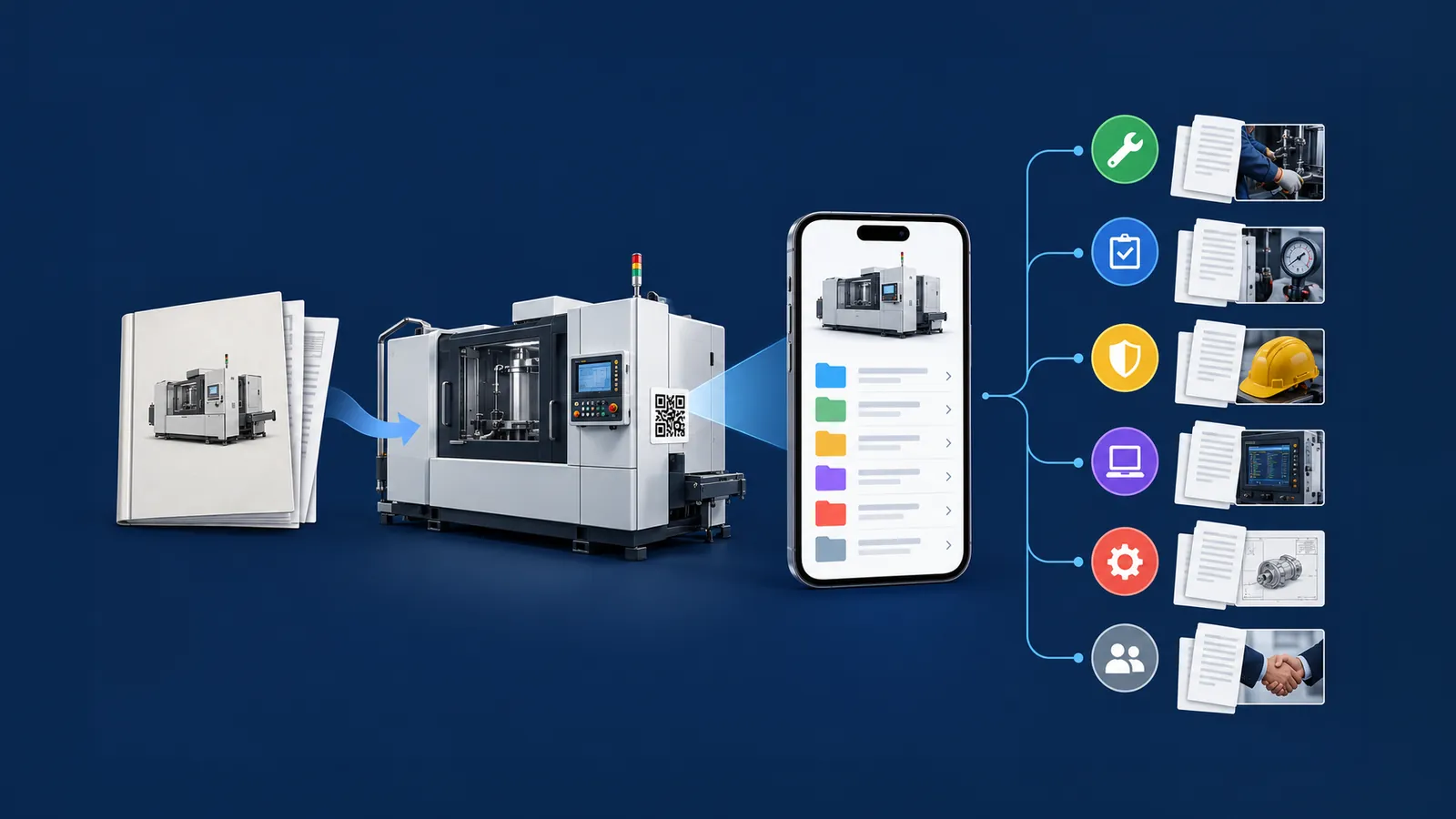
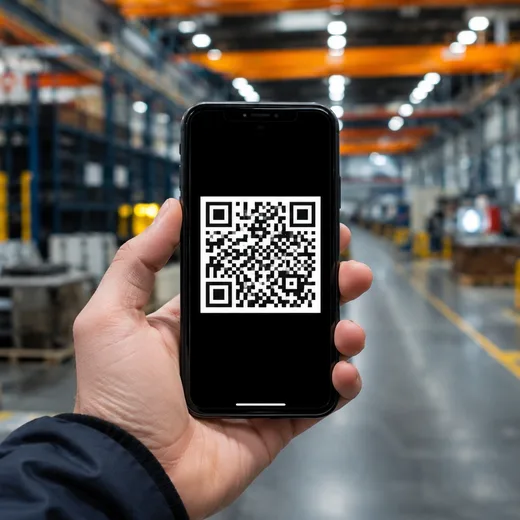
Document sharing also plays a role. The QR Cube® is not a simple QR Code, but an intelligent container. It allows you to group multiple files or entire folders into a single code. You can apply it to products, machinery, or physical documentation. Its most important feature is that, even after being printed, the contents can be updated in the cloud. This means that an AI system accessing information via a QR Cube will always receive the most recent and approved version of the document.
Imagine a construction company using AI to monitor project progress and access technical drawings via QR Cube. Any changes to the drawings will be immediately available to the AI system, avoiding errors based on outdated information.
Audit Room for Compliance
Certiblok®'s Audit Rooms are virtual spaces designed for collaboration on evaluations, certifications, and audits. Here, inspectors or consultants can access the necessary documents without them being duplicated or moved. Afterwards, a customized report is generated. This functionality is invaluable for demonstrating compliance with the EU AI Act, providing controlled and tracked access to all relevant documentation.
Prepare for the Future with Certiblok®
The EU AI Act is not just a burden, but an opportunity for companies to strengthen their data governance and trust in AI technologies. Adopting tools that ensure document integrity, traceability, and security is no longer an option, but a strategic necessity.
Certiblok® offers you a solid foundation to face the Artificial Intelligence era with peace of mind, transforming regulatory requirements into a competitive advantage. Don't wait for the AI Act to become fully operational to adapt. Start today to organize your digital archive to protect your data and the future of your company.
Would you like to discover how Certiblok® can support your company in EU AI Act compliant document management? Contact us for a personalized consultation.